Enter a keyword below to search for articles and products.
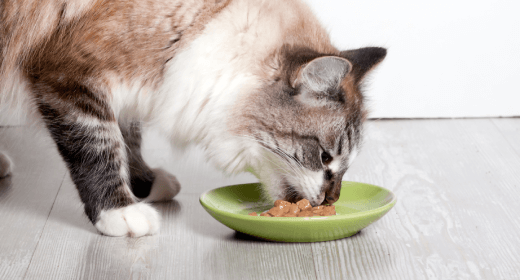
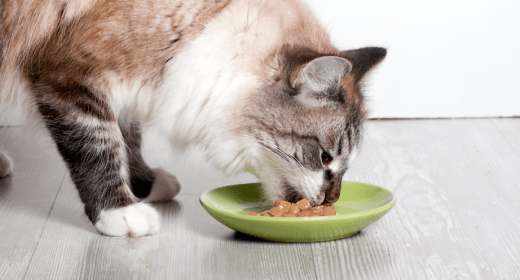
Cats are known for their graceful demeanor and independent attitude. Their average lifespan is approximately 12 to 18 years. Cats over 3 years of age are deemed adults, and from the age of 11 years, they become senior cats.
Like most animals, cats’ eating habits also change with age - - kittens often need more food as they require more energy, and adult cats require a moderate amount of food to have sufficient energy. Senior cats often have a smaller appetite compared to their younger counterparts. Therefore, pet parents should keep track of their cat’s changing food requirements. Read the following if you too have queries related to feeding cats or how to feed older cats.
Your senior cat’s health and well-being are directly linked to their eating habits. Cat caregivers need to be more vigilant while feeding senior cats to ensure that their feline friend is provided with the right amount of nutrition and nourishment.
As a pet parent, you need to be mindful when feeding your cat. It has different nutritional requirements at various stages of its life. Kittens need to be fed with uttermost care to ensure appropriate growth and development, adult cats need well-monitored feeding portions to avoid overeating, and senior cats need a regularized diet to maintain their health. Hence, senior cat food contains high-quality protein and added vitamin E for more bone and joint strength.
As cats grow older, their sense of taste and smell begin to fade. Senior cats also experience deteriorating teeth which affect their ability to chew. Hence, older cats’ caregivers need to take the following measures while feeding them:
Include softer food so that it is easier for your senior cats to properly chew the food
Add food with higher meat content to enhance the food’s smell and flavor
An old kitty or senior cat may need a small quantity of food with higher nutrients. Cat feeding tips help pet parents to provide the right nutrition and nourishment to their senior kitty. Here are a few essential tips that caregivers should consider when feeding their senior cats:
Even though the food requirements of cats depend on the kitty’s age, you should also take their health condition, weight, appetite, and lifestyle into consideration. Pet parents are also recommended to consult a veterinary doctor to understand their kitty’s health requirements, nutritional deficiencies, and underlying diseases before selecting a diet plan or senior cat food brand.
Average-weight senior cats need approximately 280 to 360 calories a day. Pet parents are often advised to feed their geriatric cats high-quality cat food depending on their weight, health condition, and nutritional deficiencies.
Ideally, your senior cat should be fed a small portion of high-quality cat food at least three to four times a day. However, if your kitty has digestive issues, then you should feed it smaller portions 10 to 12 times a day.
Yes, you should feed senior cat food to your older kitty as this type of food is specifically formulated for meeting their nutritional requirements.
The benefits of senior cat food are as mentioned below:
Cats older than 11 years are considered senior cats.
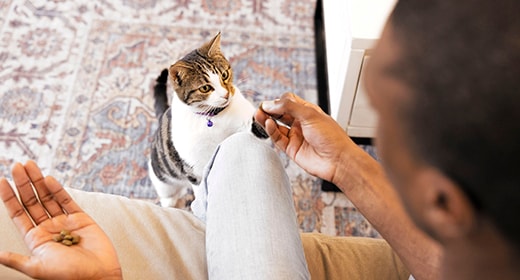
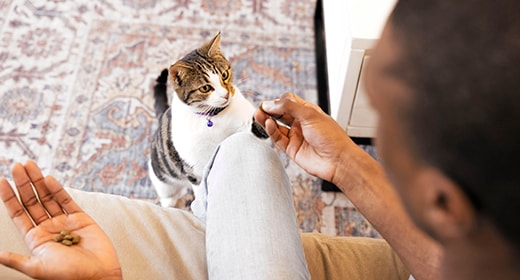
Potty training your cat at an early age can help inculcate essential hygiene habits. Starting kitten litter training as soon as your newborn pet hits the four-week mark ensures that it is well aware of the surroundings. Moreover, it ascertains that your kitty does not dirty the home. For all new cat parents wondering how to litter train a kitten, here are a few tips to get you started. Read on to learn more about the right age to start training your kitten, how to pick the right size of a litter box and more.
Adult cats naturally seek out sandy places to defecate but kittens need some guidance. Fortunately, using litter boxes comes naturally to kittens. If you are a first-time cat parent, here’s a fact that will put you at ease: unlike puppies, potty training a kitten can be fairly easy. Moreover, it is one of the first exercises you will do as a caregiver.
Things learnt at an early age, generally, sticks with you for time immemorial. And that holds true in cats as well. Hence, you can start potty training kittens once they turn 4 weeks old. If you are adopting a kitten that’s older than 4 weeks or an adult cat, start potty training it immediately.
Potty training is an important part of adopting a cat, especially if you do not want to clean the house zillion times a day. However, it is not like you buy a litter box and your kitty will get the hint. You need to teach your pet to do its business in the box. And as a first-time cat parent, you might be clueless on how to potty train a cat. Fret not, we have got you covered. Here are a few tips to help you get started with the kitten litter training:
The first step to litter training kittens is choosing a litter box. Since you are picking out a litter box for your kitten, it can be small and compact in size. Make sure there is enough room for your kitty to go in that box. It should be easy to enter and not too compact for your kitten’s size.
Moreover, your cat might feel uncomfortable to defecate in certain types of boxes. Some cats might like keeping their business private, while some could prefer being aware of their surroundings. Hence, finding the right litter for your kitten may involve some testing.
Choosing the right spot for the litter box is imperative. Place it somewhere that is not too loud, but also ensure that the box is within human interaction. For example, if you place the litter box in your basement, your kitten may not feel comfortable and eliminate somewhere in the house. You can also place the litter box in the bathroom. If you have multiple floors in your house, place at least one easily accessible litter box on every floor. Moreover, make sure you do not place the litter box next to your cat’s food and water bowls.
Once you have placed all your litter boxes at desired locations, it is time to start training your kitten. Assuming that you have placed multiple litters in your house, take your kitty to each box and let it sniff them. Next, place your kitten in the litter box. It may start pawing the litter or even use it right away. If it doesn’t, run your fingers through the litter to demonstrate pawing actions.
Here’s a tip on how to train a kitten to use a litter box: reward it. Shower your purrfect pal with its favorite treat whenever it uses the litter box successfully. For this to work, you need to give your cat a treat right after it uses the litter box so that it starts associating the usage of the litter box with good behavior.
Keeping the litter box clean is crucial to ensure that your kitten does not develop an aversion to the box. You can scoop out your cat’s waste after each use. Keep adding some litter every time you are scooping out waste to make sure that the litter depth is maintained and your kitten can easily dig. Once your cat is a little older and used to the box, you can start cleaning it once a day.