Enter a keyword below to search for articles and products.


Wheatgrass is the fresh shoots of the wheat plant harvested before the grain sprouts. Although unusual, it is a common meal component for cats. Wheatgrass is rich in protein, carotene, and vitamins A, E, and C, making it an added source of nutrition for cats. Cats often nibble on wheatgrass and leafy greens to improve their digestion as fibres present in these plants aid in smoother bowel movement. However, it is important to ensure that your cat only feeds on organic and pesticide-free wheatgrass.
Generally, all cats that are not allergic to wheatgrass can easily digest and benefit from its nutritional value of it. Wheatgrass for cats is a good source of vitamins, protein, and other essential nutrients. The fibre and selenium help in improving the cat’s gut health. However, you should identify if your kitty is allergic to wheatgrass before letting it nibble on wheatgrass. The following are some signs that will help you identify if your cat is allergic to wheatgrass:
Even if your cat is not allergic to wheatgrass, you must limit its consumption to less than 10% of its total caloric consumption. Wheat for cats is best served every alternate day instead of daily.
While everyone knows wheatgrass for cats is beneficial for digestion, there are various other benefits of wheatgrass as well. The following are some of the many benefits of wheatgrass for cats:
While there are many advantages of wheatgrass and wheat for cats, there are a few considerations and disadvantages as well. Some of the demerits of excessive munching on wheatgrass for cats are as follows:
Most cat parents have a hard time differentiating between cat grass and wheatgrass. If you are one of them, fret not. We will understand the difference between the two in this section.
Cat food brands often market wheatgrass as cat grass. However, you must note that cat grass can be any grass, from barley and oats to wheatgrass and fescue. So, if you see a pack of cat food that says cat grass, check its label. Moreover, ensure that you opt for brands that use organic ingredients.
Now that you know of the benefits of wheatgrass for cats, you can start adding the regulated amount of wheatgrass to their diet. Please consult a veterinarian before deciding to serve wheat or wheatgrass to your feline friend.
If your cat has been munching on wheatgrass or grass more than usual, it might be facing some gastrointestinal issues. It is best to consult a veterinarian to ensure their physical well-being.
Yes, cats can digest baked or cooked wheat products and wheat bran.
Total consumption of wheatgrass for cats should limit to 10% or lesser of their total caloric diet.
Yes, wheatgrass improves indoor cats’ vision, immunity, and oral as well as gastrointestinal health, and helps keep their weight in check.
Cat grass are cereal grasses that cats much on. Wheatgrass is a type of cat grass.
Potty training your cat at an early age can help inculcate essential hygiene habits. Starting kitten litter training as soon as your newborn pet hits the four-week mark ensures that it is well aware of the surroundings. Moreover, it ascertains that your kitty does not dirty the home. For all new cat parents wondering how to litter train a kitten, here are a few tips to get you started. Read on to learn more about the right age to start training your kitten, how to pick the right size of a litter box and more.
Adult cats naturally seek out sandy places to defecate but kittens need some guidance. Fortunately, using litter boxes comes naturally to kittens. If you are a first-time cat parent, here’s a fact that will put you at ease: unlike puppies, potty training a kitten can be fairly easy. Moreover, it is one of the first exercises you will do as a caregiver.
Things learnt at an early age, generally, sticks with you for time immemorial. And that holds true in cats as well. Hence, you can start potty training kittens once they turn 4 weeks old. If you are adopting a kitten that’s older than 4 weeks or an adult cat, start potty training it immediately.
Potty training is an important part of adopting a cat, especially if you do not want to clean the house zillion times a day. However, it is not like you buy a litter box and your kitty will get the hint. You need to teach your pet to do its business in the box. And as a first-time cat parent, you might be clueless on how to potty train a cat. Fret not, we have got you covered. Here are a few tips to help you get started with the kitten litter training:
The first step to litter training kittens is choosing a litter box. Since you are picking out a litter box for your kitten, it can be small and compact in size. Make sure there is enough room for your kitty to go in that box. It should be easy to enter and not too compact for your kitten’s size.
Moreover, your cat might feel uncomfortable to defecate in certain types of boxes. Some cats might like keeping their business private, while some could prefer being aware of their surroundings. Hence, finding the right litter for your kitten may involve some testing.
Choosing the right spot for the litter box is imperative. Place it somewhere that is not too loud, but also ensure that the box is within human interaction. For example, if you place the litter box in your basement, your kitten may not feel comfortable and eliminate somewhere in the house. You can also place the litter box in the bathroom. If you have multiple floors in your house, place at least one easily accessible litter box on every floor. Moreover, make sure you do not place the litter box next to your cat’s food and water bowls.
Once you have placed all your litter boxes at desired locations, it is time to start training your kitten. Assuming that you have placed multiple litters in your house, take your kitty to each box and let it sniff them. Next, place your kitten in the litter box. It may start pawing the litter or even use it right away. If it doesn’t, run your fingers through the litter to demonstrate pawing actions.
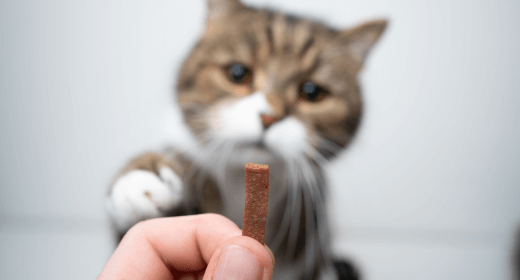
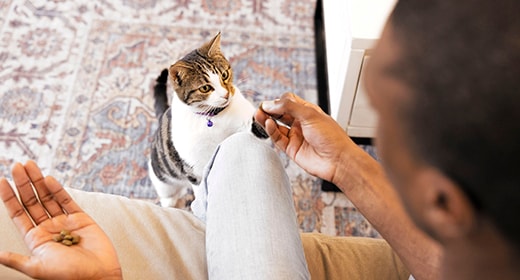
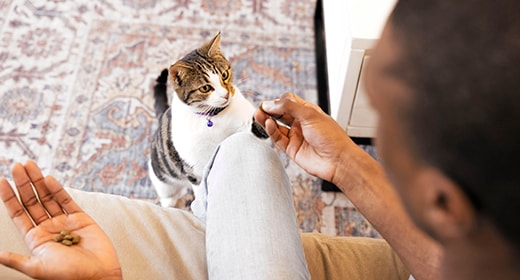
Here’s a tip on how to train a kitten to use a litter box: reward it. Shower your purrfect pal with its favorite treat whenever it uses the litter box successfully. For this to work, you need to give your cat a treat right after it uses the litter box so that it starts associating the usage of the litter box with good behavior.
Keeping the litter box clean is crucial to ensure that your kitten does not develop an aversion to the box. You can scoop out your cat’s waste after each use. Keep adding some litter every time you are scooping out waste to make sure that the litter depth is maintained and your kitten can easily dig. Once your cat is a little older and used to the box, you can start cleaning it once a day.