Enter a keyword below to search for articles and products.


Every pet parent wants to know the meaning of dog howling. Now, we all know what howling sounds like - it’s a high-pitched sound that sounds like a doleful cry. However, many of us are still quite unaware of why do dogs howl. Well, here’s a fun fact: howling for dogs is genetic inheritance. It’s no news that dogs are closely related to wolves. Despite the difference in their sizes, wolves and dogs share around 99% DNA. However, heredity is not the only reason why dogs howl. So, what does it mean when a dog howls, and how can you handle your howling dog? You will find answers to such questions in this article.
To handle a howling dog, you first need to understand the reason why your pet is making this long, wailing noise. Here’s a look at some probable causes of dog howling.
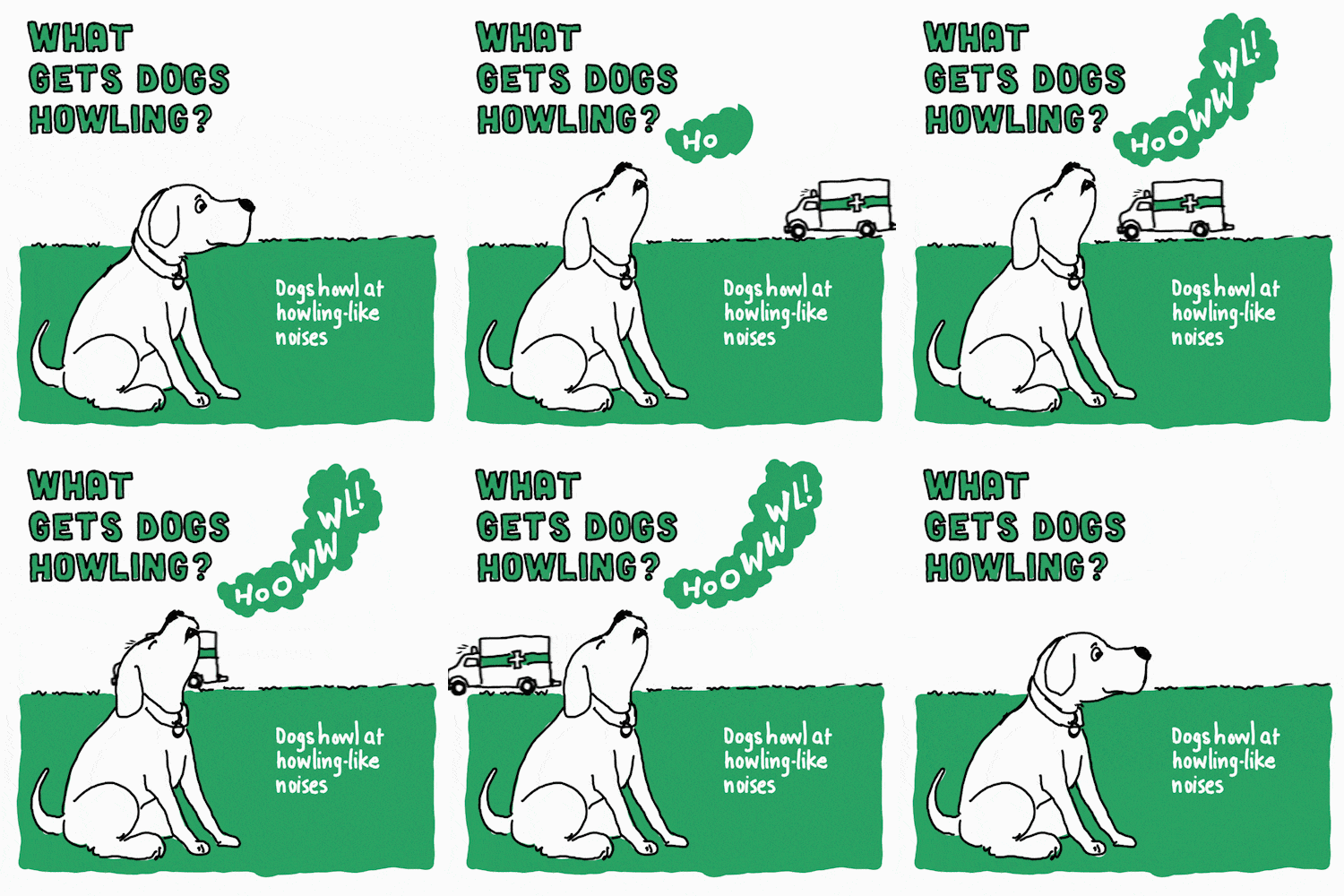
Dogs feel stimulated by high-pitched sounds. Howling is their way of responding to fireworks, sirens, bells, and other noises. This type of howling starts as soon as they hear the shrill sound. As a pet owner, you don’t have to worry about this type of howling since it usually stops when the trigger sound does.
If a dog is excessively attached to you, they might experience separation anxiety. So, once your little companion learns that you won’t be around for a few days, they might start howling under stress and anxiety. If your dog howls every time you need to leave for a long period, it is a sign of hyper-attachment. You might have to treat their anxiety to manage this type of howling. And no, scolding them is not the right way of doing it.
A howling dog could also be seeking attention. And this type of dog howling can be bothersome. You might feel like scolding, questioning, or holding your furball, but you must do the exact opposite of it. Avoid giving your pet any type of attention. Don’t pamper or scold them.
Dogs can sense bad weather, earthquakes, diseases, and so much more. Hence, you cannot rule out the fact that a howling dog could also be trying to alert you of something. Maybe they feel a situation is not right for you or could cause you potential harm. Dogs can sense the intentions of a person through their facial expressions. That’s exactly why dogs howl at some people who try to get near you or your house.
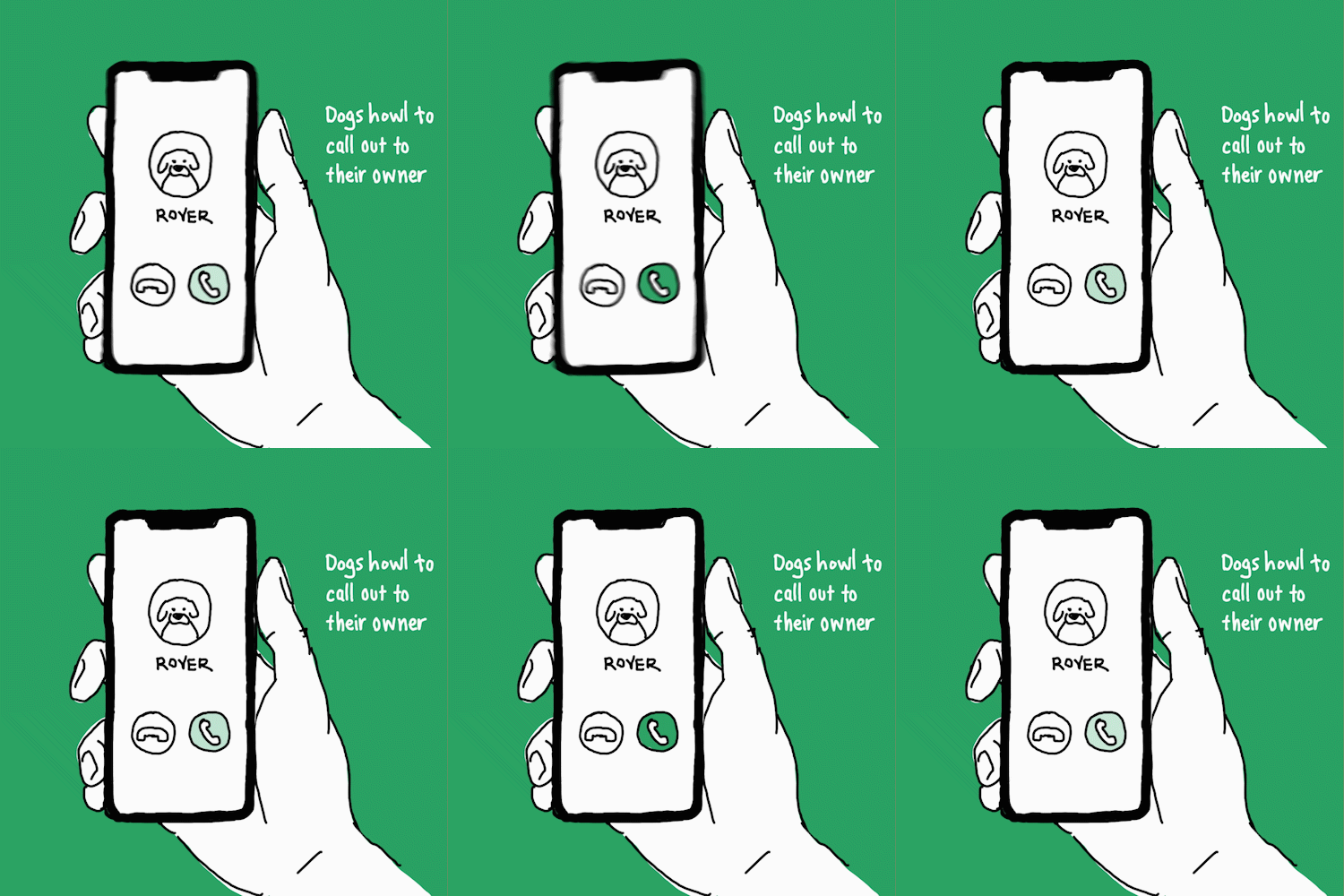
Dogs are still very social animals; it’s just that now we are their pack. When they miss us, they will howl in hopes we respond. Dr. James Serpell, BSc, Ph.D., Professor of Humane Ethics & Animal Welfare at the University of Pennsylvania School of Veterinary Medicine, explains it this way: That [howling] is an attempt on the part of the dog to ask the owner, ‘Where are you so that I can rejoin you?’
Dr. James Serpell doesn’t believe so. “My own research has shown that it is common across breeds. People think huskies may be more prone to group howling.”
Dogs going through separation anxiety may howl excessively when left home alone. Dr. Jo Gale, BVetMed CertLAS MRCVS, Senior Manager for Global Science Advocacy at Waltham Petcare Science Institute, says, “If you reinforce quiet behavior, they are less likely to continue howling.” You can do this by quieting your dog and then leaving for a very brief time before returning and rewarding them when they stay quiet. Gradually increase the time you’re gone to reassure them you’ll always be back.
But what if your pawsome pet is howling due to other reasons? Let’s understand how to handle such situations:
As a pet parent, you must avoid reacting to the howling. This could encourage your dog to howl even more. If you avoid reacting, your dog will understand that howling won’t get their demands met. This might possibly work towards reducing this behavior in the future.
Pamper your little companion when they do not howl on hearing a siren or bell. Give them attention and love when they are calm to encourage quiet behavior. Always keep your pet’s favorite treats ready so you can let them know they have been a good boy or good girl by not howling.
If your pooch often reacts to high-pitched sounds, you can even get in touch with a dog trainer. They can work with your dog to change their response to triggering sounds like sirens and fireworks.
Note: Training your fur baby is a time-consuming process. Hence, stay consistent with the actions recommended above and your pet will learn to control their howling triggers.
To understand what a howling dog means to communicate, you need to first read the situation. When dogs howl, it could mean anything–a response to high-pitched sounds, an attempt to attract attention, a suspicion towards someone, etc.
Yes. Since dogs are genetically programmed to howl, it is okay to leave them alone when they do that. However, if it bothers your neighbors, you might want to learn to handle your fur baby or get professional help.
While howling sounds like a long cry, it doesn’t always mean that they are sad.
To stop your dog’s howling, you can reward their calm and quiet behavior. If they are howling for attention, avoid reacting to it. If you need more help, you may want to reach out to a dog trainer.


Nutrition is an important part of pet care, and food is one of the basic needs of a dog. So, we cannot go wrong when it comes to feeding our fur babies. And how would anyone mess it up? As humans, we are used to satisfying the nutritional needs of ourselves. How difficult could it possibly be to do the same for a dog? Well, thanks to the endless varieties of dog food available in the market, choosing the right kind of puppy food has become a challenge. But fret not! With this comprehensive feeding guide, you can plan a healthy and balanced diet for your new-born puppy. It also covers questions like what, when, and how often to feed a puppy.
Complete and balanced nutrition is critical for the healthy growth of your puppy. In fact, according to Dr. Saza Curaming, “A puppy grows about 12x faster than a human child. That’s why the first year of a dog’s life is a critical stage and this will dictate its further development. It is at this stage where you must constantly monitor its nutrition and feeding regimen.” So, let’s look at the food guide for the first year of a newborn pup:
As compared to adult dogs, puppies need a higher protein intake. It helps with muscle development and tissue repair. Hence, it is imperative to include protein-rich foods in their diet. While iron helps create red blood cells, calcium strengthens bones and teeth. As your puppy grows, it will start learning new things. And to ensure that your pooch can see and conceive new things, it needs DHA – an omega-3 fatty acid that supports healthy vision and brain development. You must also include prebiotics in its diet as your pet cannot have a healthy gut without it!
Give your dog the food that’s specifically formulated for its breed and age. Since small breed dogs have a tiny mouth, they require smaller kibbles. Moreover, large breed dogs have a slower metabolism; hence, they require fewer calories per kilogram of their bodyweight when compared to a small or medium breed dog.
IAMS™ Proactive Health™ Starter Mother and Baby Dog is loaded with essential nutrients like protein, vitamins, and minerals. It is scientifically formulated to raise your pup’s training potential and brain development. With IAMS™, you make sure that your little pooch receives a balanced and complete meal. This dog food is perfect for newbie mother dogs as well. It ensures production of quality milk for healthy growth of the puppy.
Now that you know the nutritional requirements of a dog, let us check out the food items that are harmful for your pooch:
A fat puppy might not necessarily mean a healthy pet. The way childhood obesity often leads to medical complications in humans, an overweight puppy can also grow up to have health problems. So, make sure you monitor your furry friend’s calorie intake. This includes keeping an eye on the amount of treats you give your pup each day! Remember that treats are not the only way of rewarding a dog. You can make it feel loved and appreciated with praises, pats, and belly rubs as well.