Cats are known for their graceful demeanor and independent attitude. Their average lifespan is approximately 12 to 18 years. Cats over 3 years of age are deemed adults, and from the age of 11 years, they become senior cats.
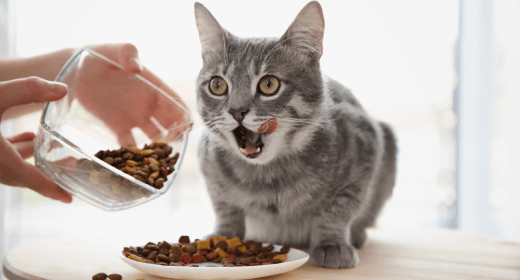
Like most animals, cats’ eating habits also change with age - - kittens often need more food as they require more energy, and adult cats require a moderate amount of food to have sufficient energy. Senior cats often have a smaller appetite compared to their younger counterparts. Therefore, pet parents should keep track of their cat’s changing food requirements. Read the following if you too have queries related to feeding cats or how to feed older cats.
Your senior cat’s health and well-being are directly linked to their eating habits. Cat caregivers need to be more vigilant while feeding senior cats to ensure that their feline friend is provided with the right amount of nutrition and nourishment.
As a pet parent, you need to be mindful when feeding your cat. It has different nutritional requirements at various stages of its life. Kittens need to be fed with uttermost care to ensure appropriate growth and development, adult cats need well-monitored feeding portions to avoid overeating, and senior cats need a regularized diet to maintain their health. Hence, senior cat food contains high-quality protein and added vitamin E for more bone and joint strength.
As cats grow older, their sense of taste and smell begin to fade. Senior cats also experience deteriorating teeth which affect their ability to chew. Hence, older cats’ caregivers need to take the following measures while feeding them:
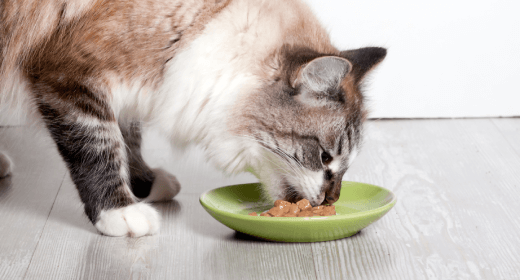
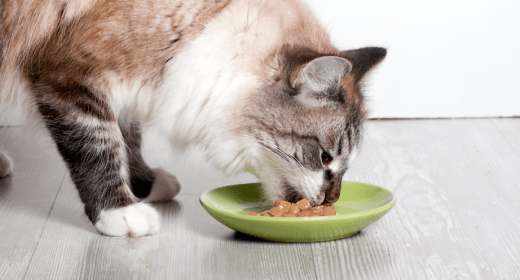
Include softer food so that it is easier for your senior cats to properly chew the food
Add food with higher meat content to enhance the food’s smell and flavor
An old kitty or senior cat may need a small quantity of food with higher nutrients. Cat feeding tips help pet parents to provide the right nutrition and nourishment to their senior kitty. Here are a few essential tips that caregivers should consider when feeding their senior cats:
Even though the food requirements of cats depend on the kitty’s age, you should also take their health condition, weight, appetite, and lifestyle into consideration. Pet parents are also recommended to consult a veterinary doctor to understand their kitty’s health requirements, nutritional deficiencies, and underlying diseases before selecting a diet plan or senior cat food brand.
Average-weight senior cats need approximately 280 to 360 calories a day. Pet parents are often advised to feed their geriatric cats high-quality cat food depending on their weight, health condition, and nutritional deficiencies.
Ideally, your senior cat should be fed a small portion of high-quality cat food at least three to four times a day. However, if your kitty has digestive issues, then you should feed it smaller portions 10 to 12 times a day.
Yes, you should feed senior cat food to your older kitty as this type of food is specifically formulated for meeting their nutritional requirements.
The benefits of senior cat food are as mentioned below:
Cats older than 11 years are considered senior cats.
Antioxidants are good for your cat because they play a key role in minimizing damage to cells, including cells of the immune system.
These important, naturally occurring nutrients help maintain health by slowing the destructive oxidative process of cellular molecules. They also can be important in supporting immune responses and vaccine recognition in cats. This may be especially critical for kittens that are being vaccinated while their immune system is still developing.
Additionally, antioxidants can reverse decreases in immune-cell function for senior cats, increasing them back to healthy adult levels.
Antioxidants are nutrients found naturally in the body and in plants such as fruits and vegetables. Common antioxidants include vitamin C, vitamin E and certain compounds called carotenoids (including lutein and beta-carotene). A blend of several antioxidants in moderate amounts may be more effective than high levels of one antioxidant.
As cells function normally in the body, they produce damaged molecules called free radicals. These free radicals are highly unstable and steal components from other cellular molecules, such as fat, protein or DNA, thereby spreading the damage.
This damage continues in a chain reaction, and entire cells soon become damaged and die in a process called peroxidation. Peroxidation is useful because it helps the body destroy cells that have outlived their usefulness and kills germs and parasites. However, when left unchecked, peroxidation also destroys or damages healthy cells.
Antioxidants help prevent widespread cellular destruction by willingly donating components to stabilize free radicals. More importantly, antioxidants return to the surface of the cell to stabilize rather than damage other cellular components.
When there are not enough antioxidants to hold peroxidation in check, free radicals begin damaging healthy cells, which can lead to problems. For example, free radical damage to immune cells can lead to an increased risk of infection.
Because antioxidants play a key role in minimizing damage to cells, such as those that make up the immune system, recent research examined the benefits of certain antioxidants on the immune response of cats. The results of these studies indicated that antioxidants are important in helping cats maintain a healthy immune system.
The research also showed that each antioxidant benefits the immune system uniquely, so one antioxidant at high levels is not as effective as a group of antioxidants acting together.
| Antioxidant | Source | Function |
|---|---|---|
| Vitamin E | Plant oil extract, tocopherols | Optimizes immune system’s T-cell activation |
| Beta-carotene | Vitamin premix, corn meal, chicken by-product meal and chicken fat | Optimizes types of cells present in the blood, increases antibody levels in the blood and optimizes vaccine recognition |
Recent research also examined the effect of aging on immune responses. The findings indicate that as cats age, immune cell responses may decline. Including antioxidants in your cat’s diet can help reverse the age-related decrease in immune cell function, returning it to healthy adult levels.