Enter a keyword below to search for articles and products.
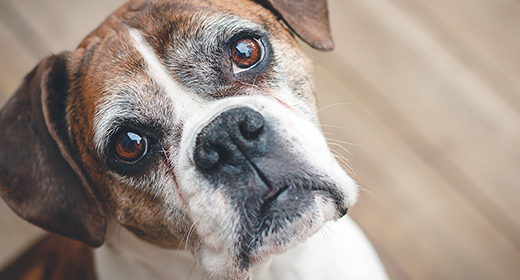
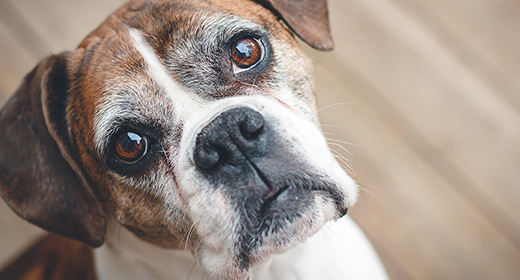
Does your mature dog sniff at his bowl and walk away instead of digging in? You may think he’s just being picky, but it’s important to keep an eye on how much he’s eating — especially if he’s a senior. While age-related diminishment of the senses of smell and taste may account for some of his disinterest in food, appetite loss can also indicate a serious medical problem.
“It’s important to give your dog enough calories because weight loss can be debilitating to senior pets,” says Wendy Brooks, D.V.M., who warns that a loss in appetite should be mentioned to your vet. A good rule of thumb: If your pet hasn’t eaten in a day, make a visit to the vet. Here are six ways to entice your canine friend with a nourishing meal.
Many animals find canned food more palatable because they like the taste and texture, Brooks says. You can top their favorite dry food with room-temperature wet food.
Dogs like a warm or room-temperature (not hot or cold) meal. Avoid serving him day-old wet food from the refrigerator, and keep his food away from heat. Another reason he might not be eating: It's too hot outside.
Dogs prefer consistency when it comes to their food. Don't change every day, but try a new flavor, such as lamb or chicken, and see if he responds (it may trigger his sense of smell). To avoid an upset stomach, introduce a new food by mixing it with his old food in equal increments each day.
Common mature-dog health issues, such as arthritis or joint pain, can make it difficult for him to access his bowls. Keep food and water where he spends most of his time. Put a water bowl on all floors of the house, too.
Older pets are at a higher risk of dehydration. Provide a clean bowl with fresh water at all times. It will help prevent disease, such as a kidney condition, and aid in digestion.
Dogs are people pleasers. If you see him eating, give him a little verbal reward. He'll know it makes you happy and will repeat the behavior.
Active dogs thrive on diets high in fat. To preserve a high-fat dry kibble diet, however, is a challenge. The IAMS research team met that challenge with an effective preservative system used in all our dry dog food products, such as IAMS™ ProActive Health™ Adult MiniChunks.
The preservative system features a special blend of mixed tocopherols. Tocopherols are antioxidants extracted from vegetable oils. There are four major types of tocopherols. Vitamin E, also known as alpha-tocopherol, is commonly used in dog foods, though a specific mixture of the different tocopherols protects against rancidity.
Our preservative system slows the rate of oxidation and allows for an extended shelf life.
Wet foods, such as IAMS™ ProActive Health™ with Chicken and Whole Grain Rice Pate, do not require preservatives because they are preserved by packaging. When the ingredients are mixed and ready for cooking, the mixture is packed into cans, trays or pouches and cooked in a retort. Similar in principle to a pressure cooker, the retort sterilizes and preserves the product.
The cans, trays or pouches are then cooled under conditions that assure product sterility and container integrity.
Thorough shelf-life testing is conducted on all our products. In general, shelf lives for various types of products are:
24 months for wet foods
16 months for dry foods
12 months for biscuits
By using a preservative system in our dry dog food and preservation through packaging in our wet dog food, IAMS makes sure the food your dog eats is well-balanced and nutritionally beneficial.