IAMS PH
Why Is My Dog Shaking?

adp_description_block321
Why is My Dog Shaking? Reasons and When to See a Vet

  • Share

Since we cannot directly communicate with our dogs, there are certain behaviors and actions that immediately concern us. One of these behaviors is a dog shaking. No, not the fun way they shake off water starting from their nose all the way to the end of their tail. We’re talking about that full-body trembling you’ve likely seen your pooch do from time to time. Why do they do it? And is it something you should be worried about?
 

Why is my dog shaking?
 

A majority of dog owners in an IAMS™ survey* (64%) think the reason behind a dog shivering is that they are cold. Other top responses were because the dogs are scared (57%) or anxious (54%). High-fives all around because it turns out there are a number of reasons why dogs shake, and all those are possible correct answers. Here are some probable reasons behind a dog trembling:
 

  • They're chilly

Just like their owners, dogs will often shiver when cold. Dr. Tammie King, Applied Behavior Technical Leader at Waltham Petcare Science Institute, says: “Dogs shiver in response to falling temperatures. Dogs with short or no hair are especially susceptible. You should get them warm, put coats on them or bring them inside.”
 

  • They're They're anxious or scared

“Shaking is a response to epinephrine or adrenaline secretion — a sign of anxiety where the dog is on high alert,” says James Serpell, B.S., Ph.D., Professor of Humane Ethics & Animal Welfare at the University of Pennsylvania School of Veterinary Medicine. You may notice this when you’re at the vet or there’s a situation where they feel threatened. Dr. Serpell also offers a way to help in some cases: “Identify what’s triggering the behavior. Provide them comfort. Going forward, you can gradually desensitize your pet to the thing it’s afraid of.”
 

  • They're They’re having seizures

Seizures, a serious medical condition, can be hard to differentiate from normal shaking. Dogs may shake for numerous reasons, with most being relatively harmless. However, seizures require immediate medical attention. Especially because this health issue can result in your dog’s muscles seizing up, causing a loss of mobility and awareness of its surroundings. Hence, if you notice violent shaking in your dog, rush to an emergency room as quickly as possible.
 

  • They're They’re excited

This is probably the most comforting answer to every dog owner’s concern. Apart from being a response to anxiety or stress, a dog’s trembling can also be a result of excitement. This trembling or shaking is not a matter of concern and will stop once the animal calms down.
 

  • They're They're not feeling well

Trembling can also be a sign of serious issues like injury, poisoning, or kidney disease. Dr. Jo Gale, BVetMed CertLAS MRCVS, Senior Manager, Global Science Advocacy at Waltham Petcare Science Institute urges pet owners to be vigilant: “If a pet is unwell in another way, they could be trembling.” If their shaking is accompanied by symptoms like diarrhea, limping, or vomiting, you should consult your vet straight away.
 

  • They’re suffering from Shaker syndrome

Shaker syndrome has been observed in white dogs of smaller-sized breeds. It causes shivering in a dog’s entire body. The precise cause of this syndrome is not yet known; however, your vet will be able to prescribe medications upon close examination.
 

  • They're They’re getting old

Old age is also a pretty common cause of shaking and shivering in dogs. This is because age reduces tolerance to even a slight amount of cold. Besides that, shaking can also be a result of other old-age-related issues like joint pains or weakening of limbs.
 

When to see a vet for dog shivering or shaking?


As mentioned earlier, you should immediately consult a vet if, along with shaking, your dog is also experiencing vomiting, limping, or diarrhea. Even though shaking is a common symptom of old age-related issues, you must take your dog to the vet. If they are suffering from joint pain, early treatment is necessary. It is also advisable to visit a vet if your dog’s shaking or shivering hasn’t stopped even after a few minutes.
 

Now that you know why dogs shake, ensure that you pay close attention to your furry friend’s well-being. Though most of these reasons pose no threat to its health, some can be concerning. Additionally, look for other symptoms like diarrhea, vomiting, fever, and blank stares as they can help you gauge the seriousness of the situation.


 

Frequently asked questions on Why is My Dog Shaking?

  1. Why is my dog shivering?
  2. Your dog may be shivering due to the cold or because they are stressed out. If you are unable to identify the exact cause of dog trembling or shivering, do reach out to a vet immediately. 

  3. What should I do if my dog is shaking?
  4. Firstly, identify the potential cause for your dog to shake or tremble. If your dog is shaking out of excitement, anxiety, or stress, it is not a matter of concern, and you can simply try to calm the pet down. If the animal is shaking due to cold, wrap it in blankets and layers until the dog’s shaking stops. However, if neither of these is the cause, look for other symptoms of illness or injury. The shaking might be due to either of those, and your dog may need immediate medical help.

  5. How do I comfort a shivering dog?
  6. If your dog is shivering due to the cold, wrap them in blankets until they feel warm. If they are feeling anxious, you can take them to a place where they feel safe. You can also talk to them in a comforting tone until they feel calm.

  7. Should I be worried if my dog is shaking?
  8. A dog’s shaking or shivering is not always a matter of concern. For instance, if it is caused by anxiety, stress, or excitement, the shaking will stop in a few minutes, or as soon as your dog calms down. Also, if it is caused due to cold, it will stop once your dog feels warm again. However, if it is caused due to an injury, or is accompanied by symptoms like vomiting and diarrhea, it is a matter of concern and needs immediate attention from a vet. You may also need to consult a vet if your dog is a senior suffering from shaking or trembling.

  9. What does it look like when a dog has tremors?
  10. Tremors in a dog are involuntary and rhythmic muscle movements which may occur in the entire body or in parts of the body. These movements may either be fast or slow.

  • cat article detail banner
    Tips for Feeding Your Adult Cat
    adp_description_block56
    Tips for Feeding Your Adult Cat

    • Share

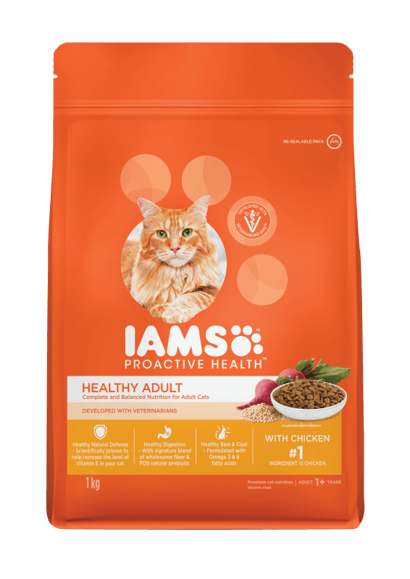
    At about 12 months, your cat no longer requires the high levels of minerals, protein, and energy needed while he was a quickly growing kitten. So switch him to a high-quality food, such as IAMS™ ProActive Health™ Adult Original with Chicken, which is specifically balanced for the nutritional needs of adult cats. When choosing food, follow these steps.
     

    • Read the nutritional claims on food packages. Check the label to make sure the food is appropriate for the stage of your cat's life (kitten, adult, or senior). Also, look for a statement saying that the food meets the requirements of the Association of American Feed Control Officials (AAFCO). If your cat's food doesn't have the AAFCO’s nutritional claim on its label, there is no guarantee that your cat will get a complete and balanced diet.
    • Choose premium food. Premium cat foods, which generally use higher-quality, more easily digestible ingredients, are more nutrient-dense than the less expensive brands. So, your cat will get the calories he needs by eating less food. As a result, the difference in actual cost of feeding him premium food instead of generic may be only a couple of cents a day.
    • Consult your veterinarian. Because your cat's nutritional needs change as he grows older and certain medical conditions require a special diet, always talk with your vet about cat feeding specifics, including what–and how much–to feed your cat.


    Once you've selected a food, establish healthy feeding habits.

    • Always measure the food you feed your cat. Start with the portion recommended on the package, even though the serving size may not be ideal to keep your cat healthy. If he doesn't eat all of the food or starts to gain too much weight, cut back the portions; if he begins to look thin, increase the amount until he's maintaining a healthy weight.
    • Create a cat feeding schedule. Nutritionally, one meal a day is OK for adult cats. If your cat seems hungry more often, try multiple smaller meals at established times. Remember, more mealtimes shouldn't mean more food. Split up the recommended serving size to create several meals.
    • Consider free-feeding for fit and trim pets. Leaving dry food available all day so your cat can nibble whenever he likes will work if he's at a healthy weight. If he's overweight or overeats, or you can't gauge how much he's eating because other pets share his food, it's best not to leave food out.
    • Ban table scraps and limit treats. Not only are they high in fat and calories, but they also can interfere with the correct—and complete—nutrition your cat is getting from his food.
    • Introduce new food gradually. Whenever you want to begin your cat on a new food, mix it in with the old. Start with a small amount of new food and increase the percentage over several days. Cats are more likely to accept change if it happens slowly, and their digestive systems are less likely to be upset.
    • Keep fresh water in a clean bowl available at all times. Cats need water to help regulate their body temperature, digest their food, and eliminate waste, among other things. Providing plenty of fresh water is especially important if your cat eats only dry food or is prone to urinary tract blockages.

Close modal