Enter a keyword below to search for articles and products.
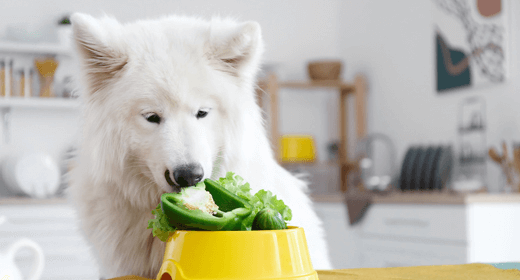
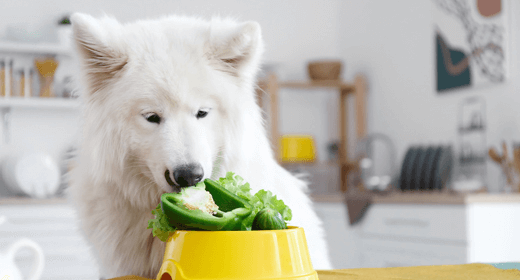
Your pooch’s diet defines its overall health and well-being. What it eats contributes to the amount of energy it has throughout the day. As a caregiver, it becomes your responsibility to provide the correct amount of nutrition and nourishment to your fur baby. Understanding the various components of your pet’s diet helps in providing them with the right nourishment.
Although everyone knows dogs need protein, carbohydrates, fat, vitamins, and minerals; did you know your canine friend also requires fiber in their diet? Even though fiber is not completely digestible it is an essential part of your pooch’s diet. High-fiber dog food aids in better digestion and bowel movement. Soluble fiber for dogs helps them in absorbing water. This type of fiber then gets fermented in their intestines to release fatty acids for better gut health. Other than soluble fiber, dogs also require insoluble fiber for better water absorption and digestion.
Fiber in dog food helps the dogs digest their food better. Proper digestion equates to better bowel movement and good gut and gastrointestinal health. Your canine friend’s food should contain at least 2-4% fiber to assist their gut health’s growth and development. Besides, fiber for dogs acts as an absorbing substance that collects excess water and acids. Given below are a few other benefits of fiber for dogs.
On average dogs need only 2-4% fiber in their daily diet. Anything beyond this measure can be considered excessive fiber consumption for dogs. While fiber is needed for better gut and gastrointestinal health, too much fiber for dogs can be a topic of concern. Given below are a few issues that may occur because of excessive fiber consumption.
Even if is fiber bad for dogs is a common query, the conclusion is fiber is needed for better digestion and gut health of your pooch. However, excess fiber consumption can lead to certain stomach and gut-related issues, while eating little to no fiber is also not a good choice. Avoiding fiber altogether can lead to the anal gland diseases and gut illness. Hence, as a pet parent, you must ensure your canine friend is provided with the right amount of fiber in their daily diet. Besides fiber dogs also need adequate amounts of protein, carbohydrates, and fat in their diet for consistent growth and development.
Yes, dogs need some amount of fiber in their diet to digest their food and absorb excess water.
On average dogs need to consume at least 2-4% fiber per meal. While their daily fiber consumption should not be anything more than 10%.
As fiber is not completely digestible, consuming too much fiber can lead to diarrhea and gas issues in dogs.
Yes, fiber consumption can increase your pet’s urge to poop or make them poop more as fiber helps in removing excess water, acid, and other undigested components from your pet’s body.
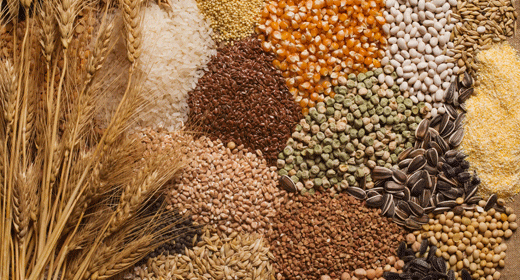
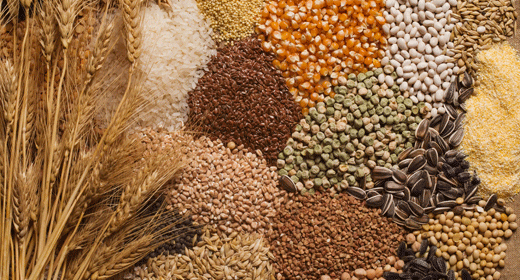
IAMS research has shown that some dog-food products are best formulated using a combination of carbohydrate sources. All IAMS dog foods are formulated precisely to meet the nutritional needs of your dog in his life stage. Such a combination offers optimal digestibility and helps maintain energy levels.
Our dog foods contain a variety of carbohydrate ingredients:
Barley: IAMS uses ground whole-grain barley that's cooked at high temperatures and finely ground in our dry dog-food formulas as part of our patented carbohydrate blend.
Corn: IAMS uses high-quality corn kernels that have been finely ground to break up the outside covering of each kernel, and then cooked at high temperatures to increase digestibility.
Grain sorghum: Also called milo, it is cracked, finely ground, and cooked before it is added to our dry dog foods. It is another carbohydrate source in our patented carbohydrate blend.
Rice flour: Our foods contain small kernels of white rice that have been separated from the larger kernels of milled rice, ground, and cooked at high temperatures to optimize digestibility.
Wheat: This is another high-quality carbohydrate source. In our biscuits, the wheat is an excellent, palatable carbohydrate source and adds a firm texture to the biscuit during the baking process.
Highly digestible diets are an important factor in the well-being of your dog. They deliver more essential nutrients more efficiently, so there is less waste.
Innovative and patented research by IAMS scientists has found that when the complex-carbohydrate sources grain sorghum and barley are used in a dog's diet, their breakdown is enhanced at another level.
These carbohydrate sources are all highly digestible, meaning your dog's body will still metabolize a high percentage of each for energy. What's unique about these grains is that they break down slowly and evenly, providing a stable source of energy.
The slow, even breakdown of grain sorghum, corn, and barley results in moderate, stable blood glucose levels after a meal. By minimizing swings in blood glucose, diets containing such a blend supply sustained energy. IAMS holds a patent on using grain sorghum and barley in a blend for dogs.