Enter a keyword below to search for articles and products.
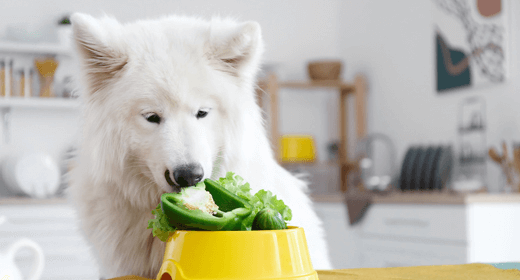
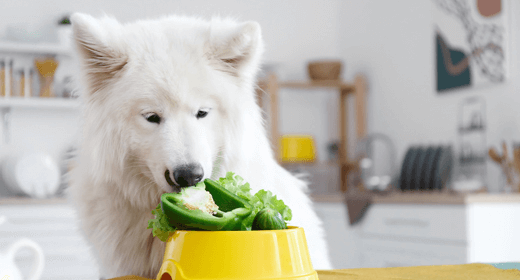
Your pooch’s diet defines its overall health and well-being. What it eats contributes to the amount of energy it has throughout the day. As a caregiver, it becomes your responsibility to provide the correct amount of nutrition and nourishment to your fur baby. Understanding the various components of your pet’s diet helps in providing them with the right nourishment.
Although everyone knows dogs need protein, carbohydrates, fat, vitamins, and minerals; did you know your canine friend also requires fiber in their diet? Even though fiber is not completely digestible it is an essential part of your pooch’s diet. High-fiber dog food aids in better digestion and bowel movement. Soluble fiber for dogs helps them in absorbing water. This type of fiber then gets fermented in their intestines to release fatty acids for better gut health. Other than soluble fiber, dogs also require insoluble fiber for better water absorption and digestion.
Fiber in dog food helps the dogs digest their food better. Proper digestion equates to better bowel movement and good gut and gastrointestinal health. Your canine friend’s food should contain at least 2-4% fiber to assist their gut health’s growth and development. Besides, fiber for dogs acts as an absorbing substance that collects excess water and acids. Given below are a few other benefits of fiber for dogs.
On average dogs need only 2-4% fiber in their daily diet. Anything beyond this measure can be considered excessive fiber consumption for dogs. While fiber is needed for better gut and gastrointestinal health, too much fiber for dogs can be a topic of concern. Given below are a few issues that may occur because of excessive fiber consumption.
Even if is fiber bad for dogs is a common query, the conclusion is fiber is needed for better digestion and gut health of your pooch. However, excess fiber consumption can lead to certain stomach and gut-related issues, while eating little to no fiber is also not a good choice. Avoiding fiber altogether can lead to the anal gland diseases and gut illness. Hence, as a pet parent, you must ensure your canine friend is provided with the right amount of fiber in their daily diet. Besides fiber dogs also need adequate amounts of protein, carbohydrates, and fat in their diet for consistent growth and development.
Yes, dogs need some amount of fiber in their diet to digest their food and absorb excess water.
On average dogs need to consume at least 2-4% fiber per meal. While their daily fiber consumption should not be anything more than 10%.
As fiber is not completely digestible, consuming too much fiber can lead to diarrhea and gas issues in dogs.
Yes, fiber consumption can increase your pet’s urge to poop or make them poop more as fiber helps in removing excess water, acid, and other undigested components from your pet’s body.


Your new puppy's first meals at home are very important. Find out what formula your puppy has been eating, and continue feeding this food for a day or two after you bring him home. If you want to change his diet to a premium food such as IAMS™ ProActive Health™ Smart Puppy Original , gradually move him to the new formula and help avoid intestinal upsets by using the following steps:
Day 1: Fill your dog's bowl with 75% of his old food and 25% of IAMS ProActive Health Smart Puppy Original.
Day 2: Mix his former food and IAMS ProActive Health Smart Puppy Original in a 50/50 ratio.
Day 3: Feed your dog a mixture that's 75% IAMS ProActive Health Smart Puppy Original and 25% former food.
Day 4: Feed 100% of IAMS ProActive Health Smart Puppy Original.
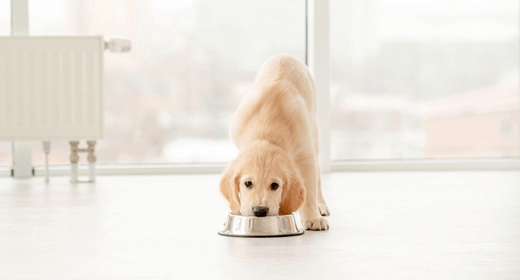
To feed a puppy from weaning to 4 months of age, offer a 100% complete and balanced premium puppy formula. To determine each serving size, start with the daily amount recommended by the feeding guidelines on the pet food label, and divide that number by the number of times a day (usually three times) you plan to feed your puppy.
Serve the food at room temperature and remove the bowl within 30 minutes after he's done eating. After four months, you can feed a puppy twice daily on a regular schedule.
Don't add nutritional supplements to your dog's diet. Adding commercial dietary supplements or 'people food' such as hamburger, eggs, cottage cheese, or cow's milk is unnecessary and might even do more harm than good.