IAMS PH
Reading Your Dog's Body Language

adp_description_block104
Reading Your Dog's Body Language

  • Share

Dogs use a range of sounds to communicate with us and each other. Just as important is the body language they use to tell us how they feel or what they need. How well do you know your pooch’s unspoken cues? Read on to find out.


Why do dogs stare?

Dogs often stare at their owners because they love them. They want to make sure you’re okay or find clues for what you’ll do next — like making sure you’re not going for a car ride without them.

We love it when dogs do this, too, which has led to this trait being even more prominent. 

Opens a new windowDr. James Serpell, BSc, PhD, Professor of Humane Ethics & Animal Welfare at University of Pennsylvania School of Veterinary Medicine, explains: “We've selected dogs for this behavior. Humans love that dogs look up at them in admiration, intense loyalty. One frequent observation researchers have made is that people who handle wild dogs ... they don't look their handlers in the eye like domesticated dogs do.”


Why do dogs tilt their heads?

Dogs have great hearing. High-frequency sounds that humans can’t hear are especially interesting to them. Head-tilting helps them track down the source. Owners find these head tilts super cute and often reward this behavior, which, of course, makes them do it more.


Why do dogs yawn?

Dogs yawn when they’re tired, but it’s also a possible sign they’re stressed, impatient or frustrated — like when they’re in the vet’s office, or when you won’t throw that ball you’re holding already!


Why do dogs sit on your feet?

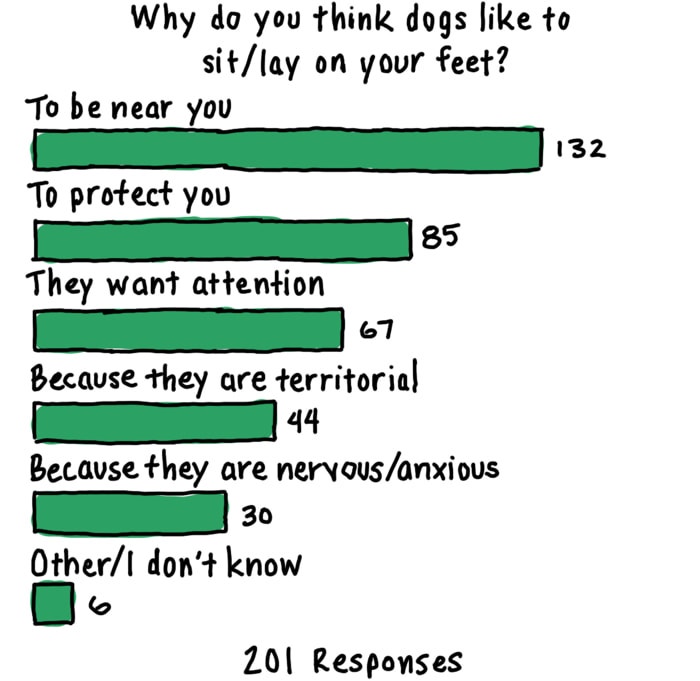
In a recent IAMS poll,* 90% of dog owners said their pet sits or lays on their feet and 100% of dogs said they love their owners. Dogs are very social creatures and this is a way for them to connect and be close to you. Plus, it keeps your feet warm.


Why do dogs raise their hair?

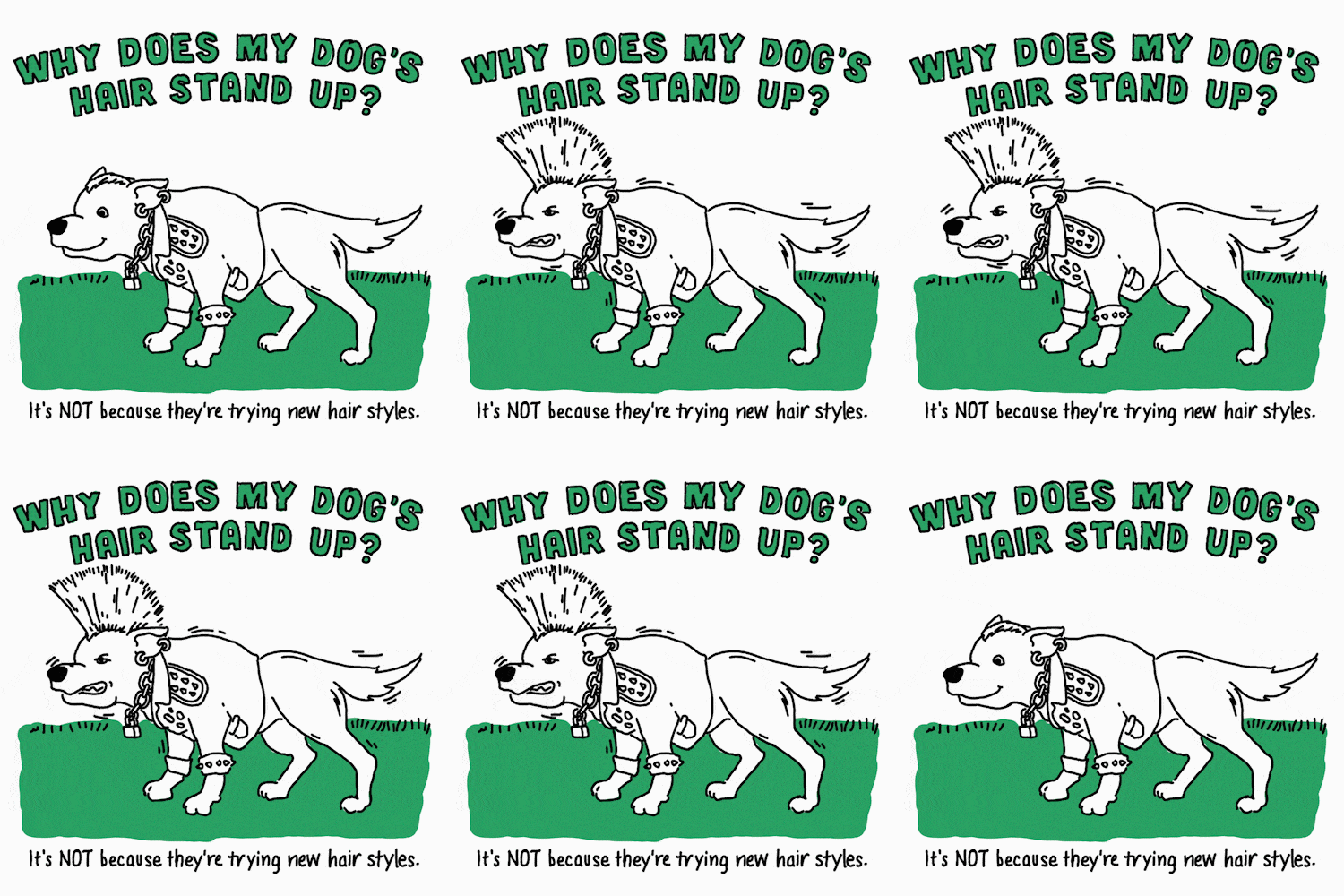
Often called “raised hackles,” dogs do this when they’re nervous, threatened or showing aggression. It’s an adaptation from their wild days of attempting to make themselves look bigger.


Opens a new window Dr. Tammie King, Applied Behavior Technical Leader at Waltham Petcare Science Institute, offered this insight to keep in mind: “What’s important when talking about a dog’s body language is to not take one thing in isolation. You’re at risk of misinterpreting what the dog is trying to say to you. Context is everything.”


So be sure to pay attention to what your dog isn’t saying to keep them healthy and happy. Serving them 

Opens a new windowIAMS dog food every day will certainly help.


*Surveyed U.S. dog owners, age 18+ 

Sample Size: n=201 

Fielded May 8 to May 10, 2020
Reading Your Dog's Body Language
  • cat article detail banner
    Tips for Feeding Your Adult Cat
    adp_description_block467
    Tips for Feeding Your Adult Cat

    • Share

    At about 12 months, your cat no longer requires the high levels of minerals, protein, and energy needed while he was a quickly growing kitten. So switch him to a high-quality food, such as IAMS™ ProActive Health™ Adult Original with Chicken, which is specifically balanced for the nutritional needs of adult cats. When choosing food, follow these steps.
     

    • Read the nutritional claims on food packages. Check the label to make sure the food is appropriate for the stage of your cat's life (kitten, adult, or senior). Also, look for a statement saying that the food meets the requirements of the Association of American Feed Control Officials (AAFCO). If your cat's food doesn't have the AAFCO’s nutritional claim on its label, there is no guarantee that your cat will get a complete and balanced diet.
    • Choose premium food. Premium cat foods, which generally use higher-quality, more easily digestible ingredients, are more nutrient-dense than the less expensive brands. So, your cat will get the calories he needs by eating less food. As a result, the difference in actual cost of feeding him premium food instead of generic may be only a couple of cents a day.
    • Consult your veterinarian. Because your cat's nutritional needs change as he grows older and certain medical conditions require a special diet, always talk with your vet about cat feeding specifics, including what–and how much–to feed your cat.


    Once you've selected a food, establish healthy feeding habits.

    • Always measure the food you feed your cat. Start with the portion recommended on the package, even though the serving size may not be ideal to keep your cat healthy. If he doesn't eat all of the food or starts to gain too much weight, cut back the portions; if he begins to look thin, increase the amount until he's maintaining a healthy weight.
    • Create a cat feeding schedule. Nutritionally, one meal a day is OK for adult cats. If your cat seems hungry more often, try multiple smaller meals at established times. Remember, more mealtimes shouldn't mean more food. Split up the recommended serving size to create several meals.
    • Consider free-feeding for fit and trim pets. Leaving dry food available all day so your cat can nibble whenever he likes will work if he's at a healthy weight. If he's overweight or overeats, or you can't gauge how much he's eating because other pets share his food, it's best not to leave food out.
    • Ban table scraps and limit treats. Not only are they high in fat and calories, but they also can interfere with the correct—and complete—nutrition your cat is getting from his food.
    • Introduce new food gradually. Whenever you want to begin your cat on a new food, mix it in with the old. Start with a small amount of new food and increase the percentage over several days. Cats are more likely to accept change if it happens slowly, and their digestive systems are less likely to be upset.
    • Keep fresh water in a clean bowl available at all times. Cats need water to help regulate their body temperature, digest their food, and eliminate waste, among other things. Providing plenty of fresh water is especially important if your cat eats only dry food or is prone to urinary tract blockages.

Close modal