Enter a keyword below to search for articles and products.


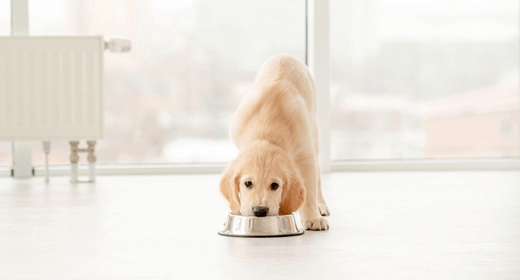
Your new puppy's first meals at home are very important. Find out what formula your puppy has been eating, and continue feeding this food for a day or two after you bring him home. If you want to change his diet to a premium food such as IAMS™ ProActive Health™ Smart Puppy Original , gradually move him to the new formula and help avoid intestinal upsets by using the following steps:
Day 1: Fill your dog's bowl with 75% of his old food and 25% of IAMS ProActive Health Smart Puppy Original.
Day 2: Mix his former food and IAMS ProActive Health Smart Puppy Original in a 50/50 ratio.
Day 3: Feed your dog a mixture that's 75% IAMS ProActive Health Smart Puppy Original and 25% former food.
Day 4: Feed 100% of IAMS ProActive Health Smart Puppy Original.
To feed a puppy from weaning to 4 months of age, offer a 100% complete and balanced premium puppy formula. To determine each serving size, start with the daily amount recommended by the feeding guidelines on the pet food label, and divide that number by the number of times a day (usually three times) you plan to feed your puppy.
Serve the food at room temperature and remove the bowl within 30 minutes after he's done eating. After four months, you can feed a puppy twice daily on a regular schedule.
Don't add nutritional supplements to your dog's diet. Adding commercial dietary supplements or 'people food' such as hamburger, eggs, cottage cheese, or cow's milk is unnecessary and might even do more harm than good.
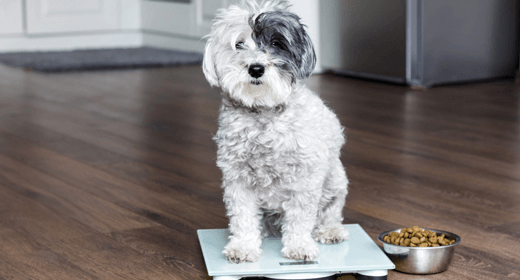
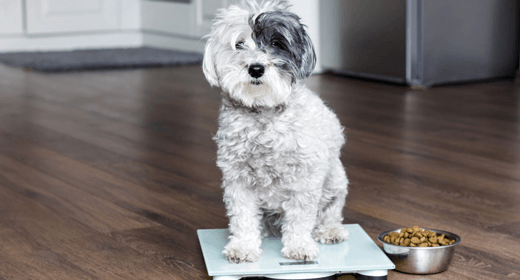
Obesity is a common problem in dogs, but you can help your pet lose weight. Identifying the causes and following a total weight-management program can result in controlled weight loss and maintenance. A total weight-management program includes evaluating the animal, educating the pet owner, modifying behaviors, and tailoring the program to individual situations.
Obesity is defined as an increase in body weight, beyond the limitation of skeletal and physical requirements, resulting from an accumulation of excess body fat.
Obesity is caused when caloric intake exceeds caloric expenditure. This simply means that a dog eats more energy (calories) than it uses and stores the excess energy as fat.
There are many factors that can contribute to obesity:
Fat
Fiber and Fatty Acids
Carbohydrates and Special Ingredients
In addition, a diet that contains L-carnitine can help dogs metabolize fat. L-carnitine is a vitamin-like compound that helps burn fat.
A total weight-management program can lead to successful weight reduction in the obese dog. Complete evaluation by the veterinarian is always recommended, and owner compliance is essential to success.
IAMS™ and professional veterinary products provide optimum nutrition for animals that can benefit from a weight-management program.