Enter a keyword below to search for articles and products.


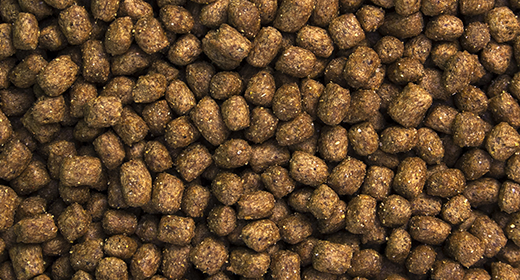
Your new puppy's first meals at home are very important. Find out what formula your puppy has been eating, and continue feeding this food for a day or two after you bring him home. If you want to change his diet to a premium food such as IAMS™ ProActive Health™ Smart Puppy Original , gradually move him to the new formula and help avoid intestinal upsets by using the following steps:
Day 1: Fill your dog's bowl with 75% of his old food and 25% of IAMS ProActive Health Smart Puppy Original.
Day 2: Mix his former food and IAMS ProActive Health Smart Puppy Original in a 50/50 ratio.
Day 3: Feed your dog a mixture that's 75% IAMS ProActive Health Smart Puppy Original and 25% former food.
Day 4: Feed 100% of IAMS ProActive Health Smart Puppy Original.
To feed a puppy from weaning to 4 months of age, offer a 100% complete and balanced premium puppy formula. To determine each serving size, start with the daily amount recommended by the feeding guidelines on the pet food label, and divide that number by the number of times a day (usually three times) you plan to feed your puppy.
Serve the food at room temperature and remove the bowl within 30 minutes after he's done eating. After four months, you can feed a puppy twice daily on a regular schedule.
Don't add nutritional supplements to your dog's diet. Adding commercial dietary supplements or 'people food' such as hamburger, eggs, cottage cheese, or cow's milk is unnecessary and might even do more harm than good.


Found in the blood and in the fluid that surrounds cells, sodium maintains the cellular environment and prevents cells from swelling or dehydrating. Sodium is also important for maintaining proper nerve and muscle cell function.
Meat, poultry, fish, and eggs are good sources of sodium. IAMS™ dog food is made with chicken, which is a great source of protein.
Sodium also might be included in commercial pet foods in the form of table salt (sometimes listed on the ingredient panel as salt). Salt is an important palatant for animals, as well as for people.
The Association of American Feed Control Officials recommends that dry dog foods contain at least 0.3% sodium for both maintenance and to support normal growth and development. This is the minimum recommended levels.
While high sodium intake might cause increased thirst and water consumption, the extra sodium is excreted in the urine of dogs. Healthy dogs are able to consume diets with higher sodium levels than those found in most commercial pet foods without increased blood pressure or gain in body water.
Therefore, the sodium level in commercial pet foods is not a cause for concern in healthy animals.

A veterinarian might recommend decreasing a dog's sodium intake if the animal has some types of kidney, liver, or heart disease, in order to help decrease high blood pressure or the accumulation of excessive body fluid.
Although older dogs might be more likely to develop these diseases, healthy older dogs do not require a low- or reduced-sodium diet.
The sodium level in our dog foods is appropriate for a healthy dog. The sodium content in these foods is balanced in proper proportions with energy, other minerals, vitamins, fats, proteins, and carbohydrates.