Enter a keyword below to search for articles and products.


Your small- or toy-breed puppy grows rapidly in the first months of their life: Their immune system is developing, their bones are growing and their muscles are getting stronger. With all this growth, they need the right mix of nutrients to support their development. To make sure your puppy is getting the proper nutrition to protect and maintain their health and well-being, keep these key points in mind.
Research shows that puppies need up to twice as much energy as adult dogs. Because they are growing so quickly at this stage, your small-but-mighty pup needs an energy-rich, nutrient-dense small-breed dog food like IAMS™ Puppy Small Breed. Puppies also need more protein than adult dogs. High-quality animal-based protein will help your puppy create new body tissue as they grow.
Aside from protein, make sure these other important nutrients and ingredients are a part of your puppy's diet:
These are important building blocks of nutrition. Look for them when you choose dry or canned dog food and when you select treats.
When it comes to feeding puppies, one size does not fit all. Small-breed puppies have higher metabolism rates per pound and reach their mature adult weight faster than larger-breed puppies. And small-breed puppies need high levels of protein, fat, calcium and phosphorus to support the growth and development of their bones, muscles and other tissues. So, giving your puppy a food that supports their breed size is the easiest way to make sure they’re getting the right balance of nutrients for their growth rate.
And remember: Small-breed puppies also have small mouths and stomachs! Make sure your puppy's food has small kibble for easy chewing. A nutrient-dense formula will help your puppy get a complete and balanced diet even though their stomach can only hold what seems like a small amount of food.
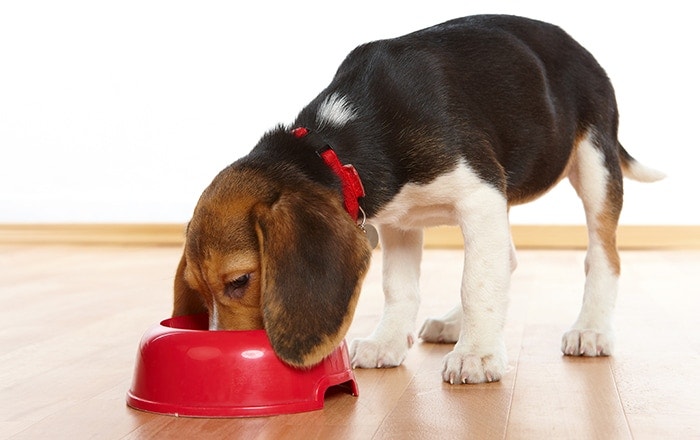
From the time your puppy is weaned until 4 months of age, you should feed your puppy two to three times a day. Check the food label guidelines to feed them the proper daily amount. After your puppy is 4 months old, feed them twice a day on a regular schedule. And make sure they always have access to fresh water, too!
A small-breed puppy reaches adult weight faster than larger breeds. You can start feeding an adult dog food, such as IAMS™ Adult Small Breed, when they are around 9 to 12 months old.
Your dog might not be thrilled about the change at first, but don't worry. You can help ease the transition by gradually introducing the adult food. Try mixing 25% of the new food with 75% of their puppy food, and then gradually change the proportions over the next three weeks until they are eating 100% adult food.
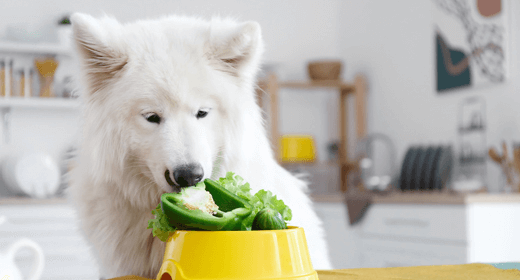
Your pooch’s diet defines its overall health and well-being. What it eats contributes to the amount of energy it has throughout the day. As a caregiver, it becomes your responsibility to provide the correct amount of nutrition and nourishment to your fur baby. Understanding the various components of your pet’s diet helps in providing them with the right nourishment.
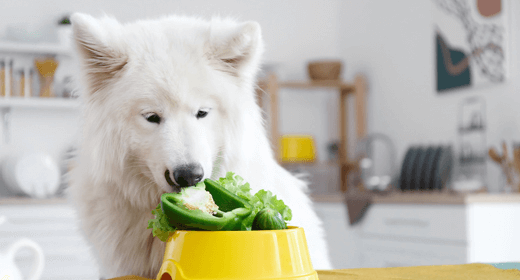
Although everyone knows dogs need protein, carbohydrates, fat, vitamins, and minerals; did you know your canine friend also requires fiber in their diet? Even though fiber is not completely digestible it is an essential part of your pooch’s diet. High-fiber dog food aids in better digestion and bowel movement. Soluble fiber for dogs helps them in absorbing water. This type of fiber then gets fermented in their intestines to release fatty acids for better gut health. Other than soluble fiber, dogs also require insoluble fiber for better water absorption and digestion.
Fiber in dog food helps the dogs digest their food better. Proper digestion equates to better bowel movement and good gut and gastrointestinal health. Your canine friend’s food should contain at least 2-4% fiber to assist their gut health’s growth and development. Besides, fiber for dogs acts as an absorbing substance that collects excess water and acids. Given below are a few other benefits of fiber for dogs.
On average dogs need only 2-4% fiber in their daily diet. Anything beyond this measure can be considered excessive fiber consumption for dogs. While fiber is needed for better gut and gastrointestinal health, too much fiber for dogs can be a topic of concern. Given below are a few issues that may occur because of excessive fiber consumption.
Even if is fiber bad for dogs is a common query, the conclusion is fiber is needed for better digestion and gut health of your pooch. However, excess fiber consumption can lead to certain stomach and gut-related issues, while eating little to no fiber is also not a good choice. Avoiding fiber altogether can lead to the anal gland diseases and gut illness. Hence, as a pet parent, you must ensure your canine friend is provided with the right amount of fiber in their daily diet. Besides fiber dogs also need adequate amounts of protein, carbohydrates, and fat in their diet for consistent growth and development.