Enter a keyword below to search for articles and products.
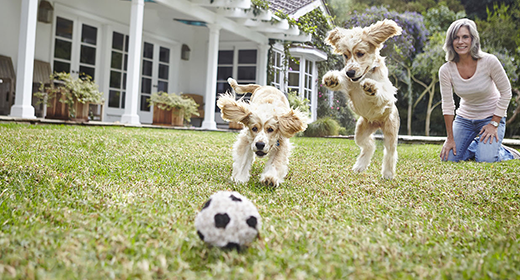
A: My personal preference is not to use food at all. When I have trained dogs for obedience, I have always used the verbal praise-reward method. It works well, especially with some dogs who are not motivated by food rewards.
Many people do use treat-based training with success, but I don't recommend offering table scraps as the treat. Giving a dog people food—in training or just as a general reward—may give the dog the idea that such food is fair game. It might encourage your pet to steal food from the table or from people, especially kids or guests.
In addition, many human foods can be toxic to dogs. These include chocolate, grapes, raisins, macadamia nuts, and xylitol (a sweetener often used in gum, candy, and baked goods).
As an alternative to table scraps, you could train your dog with snacks that are tasty, low in fat, and commercially prepared for training. But keep in mind that soft chew snacks may be high in sugar, which is bad for dental health. When shopping for treats, read package labels and choose premium varieties that list meat as the first ingredient.
Use only small amounts for training purposes—treats should not interfere with the consistency of a normal diet or greatly affect the caloric intake for the size and age of the dog. The training sessions should be short in length and repeated several times throughout the day. For young dogs, the training period should be no longer than five minutes.
Finally, the most important training tip is to keep it positive. If you're getting frustrated with your puppy's naturally short attention span, take a break. Strive to end the session on a positive note so your pet will be eager for the next time.
Janet Tobiassen, DVM, a veterinarian based in the state of Washington, has been practicing and writing about vet medicine since 1999. She started training dogs at age 12, through 4-H, and continued pet therapy and obedience training in veterinary school and beyond.
Population control is as essential for pets as it is for humans. Overpopulation by unwanted kindle of kittens or puppies is difficult to manage by caregivers. Many newborn young kittens and puppies are either put up for adoption or sent to an animal shelter. Besides, reproduction can be a tedious journey for your furry friend. Hence, it is better to get them spayed and neutered at the right time.
Spaying and neutering are medical procedures performed on dogs to stop their reproduction process. Dog neutering and spaying is one the essential medical procedures for providing care to your fur baby. There are many benefits of neutering and spaying your canine friend. To understand more about this helpful medical procedure, read the following.
A neutered or spayed dog cannot reproduce as their heat cycle is eliminated. Dog neutering is a medical procedure performed on male dogs while spaying is performed on female dogs. Veterinarian surgeons perform a surgical procedure to remove ovaries and uterus from female dogs. Besides population control, spaying also prevents uterine infections and breast cancer in female dogs. Whereas neutering is a similar procedure performed on male dogs. Neutered dogs undergo surgery for removing both testicles and associated structures. Male neutered dogs are generally believed to be more well-behaved and calmer. The surgery also stops their breeding acts such as humping and the urge to run away.
Getting your dog spayed and neutered is essential for their psychological and physical well-being and behavior. Yet, when to spay a dog and when to neuter a puppy is a common query amongst pet caregivers. Well, it is best to get your pooch neutered or spayed at the earliest. It is best to get your fur baby neutered or spayed before it develops breeding instincts. Undergoing the procedure between 4 and 6 months is suggested. Most breeds of dogs reach redevelopment maturity around 6 months of age, yet some breeds can easily be neutered or spayed until 9 months or even after they turn over a year old. Hence, your pooch’s breed and size decide how soon it needs to be spayed or neutered.
There are numerous reasons to opt for spaying and neutering for pets. By undergoing spaying and neutering procedures, pets can achieve better physical and psychological health. Neutered and spayed dogs are known to have better hormonal balance as their reproductive organs are removed which helps in neutralizing their breeding instincts. Mentioned below are a few more reasons why you should get your pets neutered and spayed.
It is necessary to take some preventive measures to build trust and assurance before getting your pooch neutered or spayed. The following are a few things you should do to prepare your canine friend before getting it neutered/ spayed.
Neutering or spaying can typically take anywhere between 20 to 90 minutes depending on the size, breed, and health of your pooch. As a pet parent, you need to ensure the best care and support for your fur baby to ensure its complete and stress-free recovery post-surgery. Puppies and dogs often take up to 10 to 14 days to recover after getting neutered or spayed. The following are a few things you should do to ensure your puppy recovers well after getting neutered or spayed.
Managing the population is essential for strays as well as pets. When you get your pets neutered and spayed, you eliminate their chances of contributing to the overpopulation of dogs. Besides, spaying and neutering also help in managing your pooch’s aggression and urge to run away by controlling their hormones and making them calmer. Neutering and spaying also save your pooch from falling prey to infections and fatal illnesses like cancer. Hence, it is best to get your canine friend neutered or spayed at the earliest by consulting a vet.