IAMS PH
Making the Most of Your Dog’s Mature Years

adp_description_block500
Making the Most of Your Dog’s Mature Years

  • Share

As your dog reaches his mature years, remember these tips:

  • Minimize stress and change. Avoid big moves or changes in your dog's schedule. If you must disrupt a routine, give your dog some added attention to ease the adjustment.
  • Give him regular exercise. Take him for two 15-minute walks each day to help maintain muscle tone, enhance circulation, promote digestion, and prevent weight gain.
  • Feed him smaller, more frequent meals. Instead of one large portion a day, try two or three smaller meals, which will help your dog burn calories by stimulating his metabolism.
  • Take him for routine veterinary checkups and immunizations. Regular dental care and thorough physicals will reveal subtle changes in your dog's health. At home, frequently examine him for any odd-shaped bumps or lumps. If you discover something unusual and it seems to be growing rapidly, call your veterinarian. Early detection and preventive treatment can go a long way toward extending your friend's life.
  • Give him great-tasting, premium pet food. As your dog ages, he may become less interested in eating. Make sure he gets tasty, nutrient-dense food that's gentle on his digestion.

As Dr. Michael Hayek, an IAMS™ research nutritionist who specializes in geriatric nutrition, points out, there's still much to learn about canine geriatric nutrition. For now, realize that every animal ages at a different rate and in different ways. Monitor your dog and especially watch for changes at around 7 years of age (5 years for large breeds). If necessary, adjust his diet accordingly. With the help of your veterinarian and responsible pet food manufacturers, your mature pal can live to a comfortable, healthy old age.
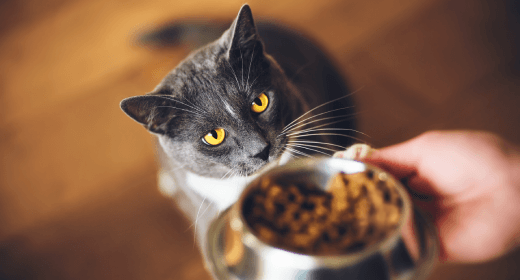
  • cat article detail banner
    Tips for Feeding Your Adult Cat
    adp_description_block467
    Tips for Feeding Your Adult Cat

    • Share

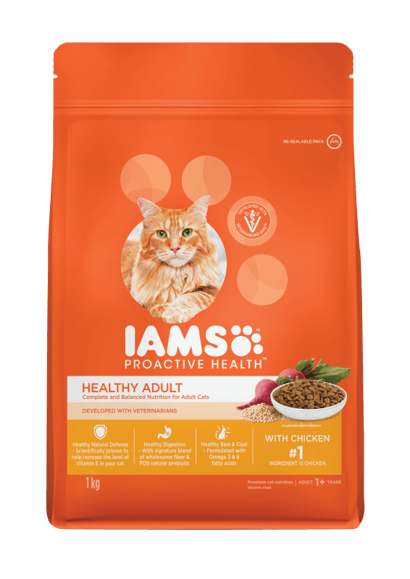
    At about 12 months, your cat no longer requires the high levels of minerals, protein, and energy needed while he was a quickly growing kitten. So switch him to a high-quality food, such as IAMS™ ProActive Health™ Adult Original with Chicken, which is specifically balanced for the nutritional needs of adult cats. When choosing food, follow these steps.
     

    • Read the nutritional claims on food packages. Check the label to make sure the food is appropriate for the stage of your cat's life (kitten, adult, or senior). Also, look for a statement saying that the food meets the requirements of the Association of American Feed Control Officials (AAFCO). If your cat's food doesn't have the AAFCO’s nutritional claim on its label, there is no guarantee that your cat will get a complete and balanced diet.
    • Choose premium food. Premium cat foods, which generally use higher-quality, more easily digestible ingredients, are more nutrient-dense than the less expensive brands. So, your cat will get the calories he needs by eating less food. As a result, the difference in actual cost of feeding him premium food instead of generic may be only a couple of cents a day.
    • Consult your veterinarian. Because your cat's nutritional needs change as he grows older and certain medical conditions require a special diet, always talk with your vet about cat feeding specifics, including what–and how much–to feed your cat.


    Once you've selected a food, establish healthy feeding habits.
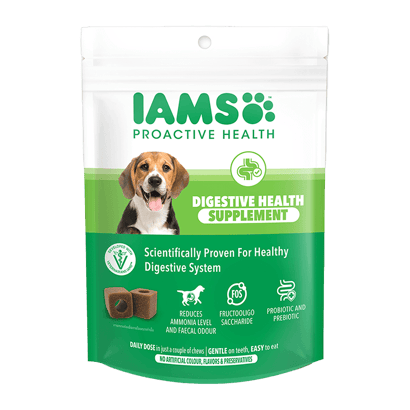
    • Always measure the food you feed your cat. Start with the portion recommended on the package, even though the serving size may not be ideal to keep your cat healthy. If he doesn't eat all of the food or starts to gain too much weight, cut back the portions; if he begins to look thin, increase the amount until he's maintaining a healthy weight.
    • Create a cat feeding schedule. Nutritionally, one meal a day is OK for adult cats. If your cat seems hungry more often, try multiple smaller meals at established times. Remember, more mealtimes shouldn't mean more food. Split up the recommended serving size to create several meals.
    • Consider free-feeding for fit and trim pets. Leaving dry food available all day so your cat can nibble whenever he likes will work if he's at a healthy weight. If he's overweight or overeats, or you can't gauge how much he's eating because other pets share his food, it's best not to leave food out.
    • Ban table scraps and limit treats. Not only are they high in fat and calories, but they also can interfere with the correct—and complete—nutrition your cat is getting from his food.
    • Introduce new food gradually. Whenever you want to begin your cat on a new food, mix it in with the old. Start with a small amount of new food and increase the percentage over several days. Cats are more likely to accept change if it happens slowly, and their digestive systems are less likely to be upset.
    • Keep fresh water in a clean bowl available at all times. Cats need water to help regulate their body temperature, digest their food, and eliminate waste, among other things. Providing plenty of fresh water is especially important if your cat eats only dry food or is prone to urinary tract blockages.

Close modal