IAMS PH
How to Track Your Puppy's Health in the First Year

adp_description_block458
How to Track Your Puppy's Health in the First Year

  • Share

Congratulations! You're the proud owner of a puppy. It's important to take steps now to ensure great puppy health. Louise Murray, DVM, director of the ASPCA's Bergh Memorial Animal Hospital in New York City and author of Vet Confidential (Ballantine, 2008), offers these pointers for your puppy's first year.

Puppy Health: Preventive Care


Talk to friends to find a veterinarian you can trust. Within a week of bringing your puppy home, take him for a checkup. The doctor will perform a physical and start keeping a detailed medical history.


Puppy Health: Vaccines


The overvaccination of pets is currently a hot topic, Murray says. The question is, however, not whether to vaccinate but which vaccines to use and how often. What she calls the 'core vaccines'—those for parvovirus, distemper, adenovirus type 2, and rabies—are essential. 'These shots protect your dog from diseases that are very real, very common, and very dangerous,' she says. Additional vaccines may be necessary based on where you live, where you take your dog, and whether you travel.


Puppy Health: Diet


Choose a reputable brand of dog food and discuss your choice with your veterinarian. In his first year, your puppy will be on food that is specifically geared toward younger dogs and will likely eat three times a day rather than once or twice.


Puppy Health: Spay/Neuter


An excellent measure against pet overpopulation, this procedure ideally should be performed between ages 4 and 5 months, which is before a female dog goes into her first heat and before a male enters puberty. A female dog who is spayed before going into heat is 2,000 times less likely to get breast cancer, Murray says. Males who are neutered before entering puberty have fewer behavioral issues, such as aggression toward other dogs and urine marking.


Puppy Health: Flea, Tick, and Heartworm Medicines

Most dogs should be on medicine year-round to prevent heartworm, a life-threatening parasitic infestation, Murray says. Fleas, often seen as just an annoyance, can actually cause severe skin problems and even anemia. Ticks carry multiple diseases (including Lyme disease and Rocky Mountain Spotted Fever). Your veterinarian can prescribe effective preventives for these two problems.


  • cat article detail banner
    Tips for Feeding Your Adult Cat
    adp_description_block463
    Tips for Feeding Your Adult Cat

    • Share

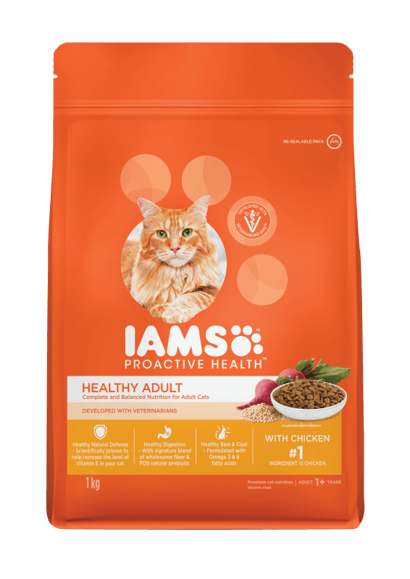
    At about 12 months, your cat no longer requires the high levels of minerals, protein, and energy needed while he was a quickly growing kitten. So switch him to a high-quality food, such as IAMS™ ProActive Health™ Adult Original with Chicken, which is specifically balanced for the nutritional needs of adult cats. When choosing food, follow these steps.
     

    • Read the nutritional claims on food packages. Check the label to make sure the food is appropriate for the stage of your cat's life (kitten, adult, or senior). Also, look for a statement saying that the food meets the requirements of the Association of American Feed Control Officials (AAFCO). If your cat's food doesn't have the AAFCO’s nutritional claim on its label, there is no guarantee that your cat will get a complete and balanced diet.
    • Choose premium food. Premium cat foods, which generally use higher-quality, more easily digestible ingredients, are more nutrient-dense than the less expensive brands. So, your cat will get the calories he needs by eating less food. As a result, the difference in actual cost of feeding him premium food instead of generic may be only a couple of cents a day.
    • Consult your veterinarian. Because your cat's nutritional needs change as he grows older and certain medical conditions require a special diet, always talk with your vet about cat feeding specifics, including what–and how much–to feed your cat.


    Once you've selected a food, establish healthy feeding habits.
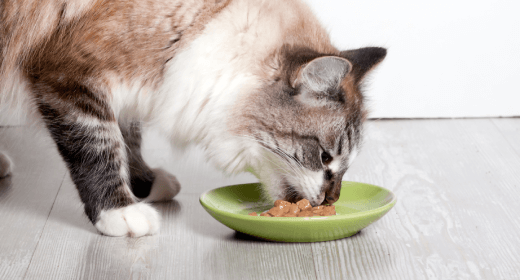
    • Always measure the food you feed your cat. Start with the portion recommended on the package, even though the serving size may not be ideal to keep your cat healthy. If he doesn't eat all of the food or starts to gain too much weight, cut back the portions; if he begins to look thin, increase the amount until he's maintaining a healthy weight.
    • Create a cat feeding schedule. Nutritionally, one meal a day is OK for adult cats. If your cat seems hungry more often, try multiple smaller meals at established times. Remember, more mealtimes shouldn't mean more food. Split up the recommended serving size to create several meals.
    • Consider free-feeding for fit and trim pets. Leaving dry food available all day so your cat can nibble whenever he likes will work if he's at a healthy weight. If he's overweight or overeats, or you can't gauge how much he's eating because other pets share his food, it's best not to leave food out.
    • Ban table scraps and limit treats. Not only are they high in fat and calories, but they also can interfere with the correct—and complete—nutrition your cat is getting from his food.
    • Introduce new food gradually. Whenever you want to begin your cat on a new food, mix it in with the old. Start with a small amount of new food and increase the percentage over several days. Cats are more likely to accept change if it happens slowly, and their digestive systems are less likely to be upset.
    • Keep fresh water in a clean bowl available at all times. Cats need water to help regulate their body temperature, digest their food, and eliminate waste, among other things. Providing plenty of fresh water is especially important if your cat eats only dry food or is prone to urinary tract blockages.

Close modal