Enter a keyword below to search for articles and products.


If you own a dog, chances are, you deal with the nuisance of shedding fur. Fortunately, there are some easy ways to help keep your dog's shedding to a manageable level.
If you own a dog, chances are, you deal with the nuisance of shedding fur. Fortunately, there are some easy ways to help keep your dog's shedding to a manageable level.
The main factor related to how much your dog sheds is which breed you own. Certain breeds, such as Yorkshire Terriers and Poodles, hardly shed at all, and are especially well suited for people who suffer from dander-related allergies. But if one of these hypoallergenic breeds is not your dog of choice, then chances are you deal with some amount of shedding. Here are some practical tips to deal with all of that hair.
Many dogs are seasonal shedders. As the temperatures begin to drop, so does the fur. Dogs shed their summer coats in the fall as their winter coats come in. The best way to deal with this is to be prepared. Brush your dog more often and vacuum more frequently. This will keep that extra hair from becoming too unmanageable.
Dogs also will go through their own version of spring cleaning. When the temperatures begin to rise in the spring, dogs will begin shedding that extra winter hair. Again, preparation is the key. Regular brushing and vacuuming will help you get through these “hairy” times.
Between the millions of strands of hair constantly growing, some breeds of dogs grow up to a total of 100 feet of fur per day! But, while your dog might not boast those kinds of hair-growth numbers, constantly replacing fur still places a demand on a dog’s system. Thirty percent of a dog's protein needs go toward hair growth. If a dog is not receiving proper nutrition, the dog's body will put the protein he's receiving toward maintaining muscle mass, leaving the coat to suffer.
A healthy, shiny coat is not only a sign of proper nutrition, but it also sheds less than an unhealthy coat. Premium dog food like IAMS™ ProActive Health™ provides dogs with the nutrients they need to keep their coat healthy, which means less shedding.
Brushing doesn't have to be a necessary evil. Train your dog to enjoy brushing, offering frequent praise during the process, and maybe even a treat at the end. This is easiest done from the time your dog is a puppy, but older dogs can be taught to enjoy brushing as well. The importance of brushing cannot be overemphasized. Just look at all the hair that ends up in the brush, and realize if it weren’t in the brush, it would be on your couch, floor, and perhaps, bed.
Be sure you're using the right kind of brush for your dog's coat. Breeds with thick undercoats need a specific type of brush, while longhaired breeds need a comb.
Last but not least, make sure to give your dog an occasional bath. Aside from the obvious benefit of having a clean, good-smelling pooch, your dog's coat will also benefit. Be warned though: Bathing your dog too frequently washes away the natural oil on his skin and coat, resulting in dry skin and, you guessed it, more shedding.
Committing the time to maintaining your dog's coat will help keep his shedding under control. Frequent brushing and vacuuming, and feeding your dog a balanced diet such as IAMS ProActive Health Adult MiniChunks will have you worrying less about an overabundance of hair and more time enjoying your furry friend.
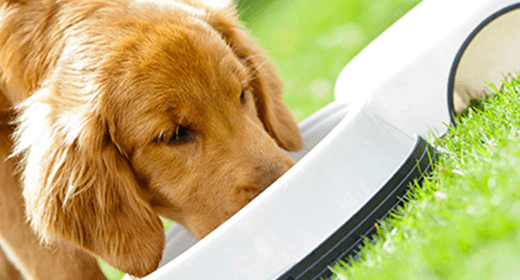
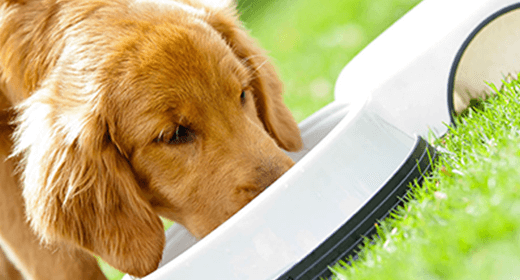
Giving your dog the right nutrients and a complete, balanced diet does not have to be a head-scratcher. All you need to know is what can dogs eat, how much to feed your dog or puppy, how to feed dogs, how many times to feed a dog, how to handle treats and supplements, etc. And this article tries to answer commonly asked questions on dog feeding.
When deciding which dog food is right for your pet, consider these three factors:
Puppies should be fed three times a day from weaning (3 to 6 weeks) to 4 months of age. After 4 months, they should be fed twice a day. Most dogs should continue to be fed twice a day throughout their life, although some pets do well with one feeding.
The answer to this question depends on your dog’s age, size, and activity level. Feeding guidelines, which list the daily-recommended portion, are included on all IAMS™ packages. Start feeding your dog with this amount and adjust according to its needs. Remember to divide the portion accordingly if you feed more than once a day.
The amount of food you need to feed your puppy depends on 3 main factors — breed, weight, and age. However, you can look at this puppy feeding table that we recommend for puppies:
Puppy | Adult Target Weight (KG) | Recommended Daily Feeding (g/day) | ||||
<3 months 3-6 months 6-9 months 9-12 months 12-18 months | ||||||
Toy breed | 1-3 | 15-72 | 32-83 | 37-83 | ||
3-5 | 33-106 | 72-121 | 83-121 | |||
Small breed (25-50) | 5-8 | 48-151 | 106-172 | 111-172 | 111-170 | Transition to IAMS™ Proactive Health™ Adult Dog Food |
8-10 | 69-178 | 151-204 | 170-204 | 170-201 | ||
Medium breed | 10-20 | 82-299 | 178-343 | 201-343 | 201-339 | |
20-25 | 137-346 | 339-404 | 339-404 | 339-404 | ||
Large breed | 25-40 | 136-492 | 346-575 | 404-575 | 396-575 | 396-563 |
40-50 | 191-509 | 493-675 | 575-681 | 563-681 | 553-676 |
This diet contains 390 kilocalories of metabolizable energy (ME) per 100 gms. Remember to have clean, fresh water available for your dog always.
You should not change your puppy’s food to adult abruptly. Giving your pet time to acclimatize to the new taste of adult food is very important. Also, if you suddenly switch your pup’s food, it can cause digestive problems. Go through this schedule that will help you understand how much to feed your dog and transition your dog’s diet from puppy food to adult food:
If you are wondering how much to feed your puppy by weight and age, check out the weight and age-wise breakdown on when to transition your puppy’s diet to adult food:
Weight Range | Age to Begin Transition |
Small breeds that weigh < 9.07 kgs | 9 and 12 months of age |
Medium breeds that weigh between 9.07 and 22.6 kgs | 12 to 14months of age |
Large breeds that weigh more than 22.6 kgs | 12 to 24 months of age |
While transitioning from adult dog food to senior dog food, it is important to factor in your dog’s weight. Look at this weight table to know when to transition your dog’s food from adult to senior:
Weight Range | Age to Begin Transition |
More than 40.8 kgs | 5 years |
23.1 to 40.8 kgs | 6 years |
9.5 to 23.150 kgs | 7 years |
Up to 9.07 kgs | 7 years |
When changing your dog’s food diet, it’s important to slowly introduce new food. Start by offering your dog’s daily portion in a ratio of 25% new food to 75% current food. During the next three days, gradually increase the amount of new food and decrease the amount of the old food.
If your dog has gained unhealthy weight, make sure to cut down on fats along with increasing regular exercise. We recommend you browse through IAMS™ products and choose dog foods that are low on fat. How much food to feed your dog if they are overweight is another major concern. You can consult your vet to understand the right amount of food your furry friend needs for each meal.
It’s important to understand that your dog’s nutritional needs change during pregnancy and ensure you feed her nutrition-rich food. For pregnant dogs, we recommend IAMS™ Puppy food as it’s full of proteins that can help your pregnant dog during the gestation period and improve the quality of milk to nourish her puppies post-delivery.
Wet food is an excellent treat that can be fed alone or mixed with dry food. Although IAMS wet dog foods are nutritionally complete and balanced, it is not necessary to offer wet food at every feeding. Our dry foods are formulated with high-quality protein sources such as chicken and contain all the essential nutrients pets need. The crunchy texture of dry food also promotes healthy teeth and gums, and aids in overall good oral hygiene. In addition, some of our dry dog foods contain a dental enhancement to help block tartar buildup on teeth during and after meals.
No. Unlike humans, dogs have fewer taste receptors. Hence, they won’t feel the urge to eat something different every day. In fact, if you find something that suits your dog’s overall health and preferences, stick to that food.
Soaking dry food will ease up the initial job of the digestive enzymes. While water will not change its nutritional value, the food should be eaten relatively soon. Moreover, ensure that the leftover portion is discarded to avoid spoilage. We recommend providing your dog with IAMS™ dry food because it is beneficial to your dog’s dental health as well.
No. Cats and dogs have different nutritional requirements. Moreover, cat foods are made with higher fat levels, which can be harmful to a dog. While it is okay for dogs and cats to sniff and lick some food from each other’s bowl, you shouldn’t let dogs eat cat food.
We recommend feeding your dog approximately two to four small biscuits per cup of food. Keep in mind that when you add biscuits to your dog’s daily diet, this increases its daily calorie intake, so you should reduce the amount of food you feed. Check the calorie content of the biscuit since biscuits vary in size and formulation.
Since IAMS™ dog foods are nutritionally complete and balanced, adding more vitamins, minerals or oils can disrupt the balanceour dog food provides. The reason why you provide your dog with a high-quality product is that it has been developed to offer nourishment in proper ratios and ensure optimal nutrition. Hence, nothing needs to be added.
Protein is one of the essential elements that should be a part of your dog’s diet. Including protein in your dog’s diet will strengthen its muscles, ligaments, and cartilages. A protein-rich food also brings about a healthy shine to your dog’s coat!
It is important to maintain a feeding schedule for dogs so that they are conditioned to expect food at that time and avoid irregular snacking in between.
You should never feed your dog home-baked goods, candy, gum, chocolate, limes, onion, and grapes. They can harm your dog’s digestive tract and cause infections as well.
IAMS™ dog food is full of key nutrients that your dog needs for its healthy growth. The basic ingredients in our food include chicken, fish oil, beet pulp, wholesome grains, and natural prebiotic.
Follow our blogs to know more about pet nutrition & and dog food diet. Feel free to contact us here in case of any queries.