Enter a keyword below to search for articles and products.
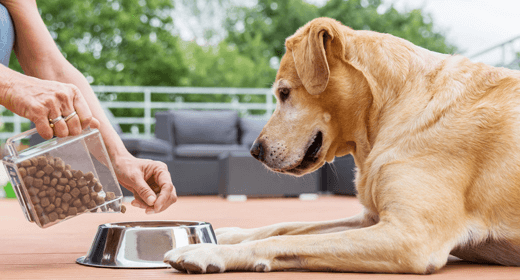
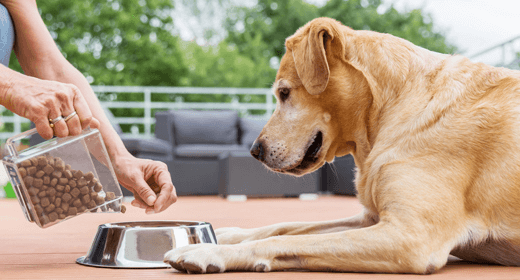
Dog-food products described as light, lite, or low calorie must meet specific calorie levels set by the Association of American Feed Control Officials (AAFCO), while dog foods named “less” or “reduced calorie” must show a percent reduction in calories as compared to a product in the same moisture-content category. The following table shows the guidelines as set by AAFCO for both dog and cat foods for determining whether a product can use the term “light.”
| Food Texture | Moisture Content | Dog Foods Maximum kcal ME/kg | Cat Foods Maximum kcalME/kg |
|---|---|---|---|
| Dry | less than 20% moisture | 3,100 | 3,250 |
| Semi-Moist | between 20 and 64% moisture | 2,500 | 2,650 |
| Canned | 65% or more moisture | 900 | 950 |
Like light versus reduced-calorie foods, lean or low-fat dog-food products must meet specific fat levels set by AAFCO, and less-fat or reduced-fat dog-food products need to show a percent reduction in fat as compared to a product in the same moisture category. AAFCO guidelines for dog and cat foods with “lean,” “low fat,” or similar words are shown in the following table.
| Food Texture | Moisture Content | Dog Foods Maximum % Crude Fat | Cat Foods Maximum % Crude Fat |
|---|---|---|---|
| Dry | less than 20% moisture | 9 | 10 |
| Semi-Moist | between 20 and 64% moisture | 7 | 8 |
| Canned | 65% or more moisture | 4 | 5 |


Your pooch’s diet defines its overall health and well-being. What it eats contributes to the amount of energy it has throughout the day. As a caregiver, it becomes your responsibility to provide the correct amount of nutrition and nourishment to your fur baby. Understanding the various components of your pet’s diet helps in providing them with the right nourishment.
Although everyone knows dogs need protein, carbohydrates, fat, vitamins, and minerals; did you know your canine friend also requires fiber in their diet? Even though fiber is not completely digestible it is an essential part of your pooch’s diet. High-fiber dog food aids in better digestion and bowel movement. Soluble fiber for dogs helps them in absorbing water. This type of fiber then gets fermented in their intestines to release fatty acids for better gut health. Other than soluble fiber, dogs also require insoluble fiber for better water absorption and digestion.
Fiber in dog food helps the dogs digest their food better. Proper digestion equates to better bowel movement and good gut and gastrointestinal health. Your canine friend’s food should contain at least 2-4% fiber to assist their gut health’s growth and development. Besides, fiber for dogs acts as an absorbing substance that collects excess water and acids. Given below are a few other benefits of fiber for dogs.
On average dogs need only 2-4% fiber in their daily diet. Anything beyond this measure can be considered excessive fiber consumption for dogs. While fiber is needed for better gut and gastrointestinal health, too much fiber for dogs can be a topic of concern. Given below are a few issues that may occur because of excessive fiber consumption.
Even if is fiber bad for dogs is a common query, the conclusion is fiber is needed for better digestion and gut health of your pooch. However, excess fiber consumption can lead to certain stomach and gut-related issues, while eating little to no fiber is also not a good choice. Avoiding fiber altogether can lead to the anal gland diseases and gut illness. Hence, as a pet parent, you must ensure your canine friend is provided with the right amount of fiber in their daily diet. Besides fiber dogs also need adequate amounts of protein, carbohydrates, and fat in their diet for consistent growth and development.