Enter a keyword below to search for articles and products.
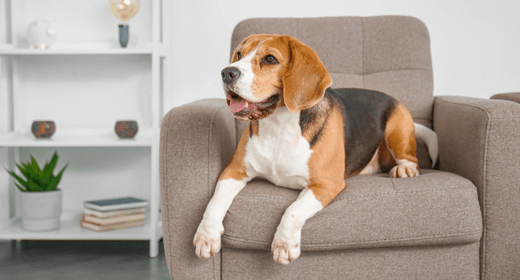
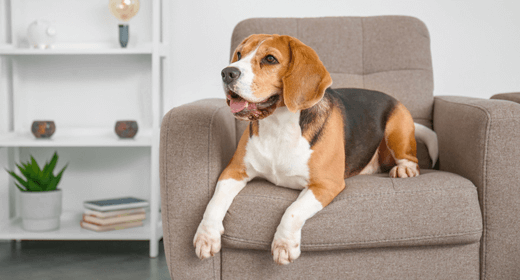
Between 25 and 40% of dogs are overweight, but often, owners don't know it until they take their dog to the veterinarian for another reason. Yet, even veterinarians can't tell if a dog is fat just by its weight. Ideal weight varies by breed, and quite widely within breeds. There's no ideal weight chart for all dogs!
You can judge your dog's condition by placing your hands on each side of his rib cage. Are the ribs protruding? Your dog may be too thin. Can you feel individual ribs easily, and is your dog's abdomen slightly tucked up when viewed from the side? That's the sign of ideal weight. If you can't feel the ribs easily, your dog has no waist, and his abdomen drags, he's too fat. Your veterinarian can help you further evaluate your dog's weight.
Before beginning any weight loss program with your dog, discuss it with your veterinarian.
You can begin your dog's weight-loss program by reducing caloric intake by 25% of his maintenance intake, and then decrease it by 10% increments every two to three weeks until a 1% weight loss per week is achieved. This means that, if your dog weighs 15 pounds, a 1% loss would be about 2-1/2 ounces.
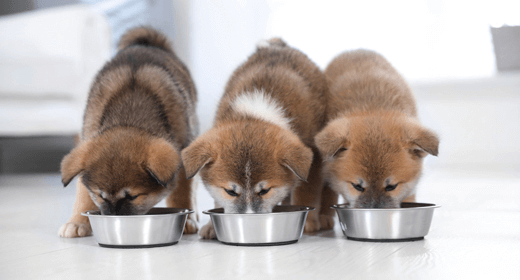
If you feed one large meal a day or keep food available at all times, try dividing the daily ration into several small meals (at least two meals a day) and pick up what has not been eaten 30 minutes after each meal.
Dogs gain weight for the same reason that people do—they eat more calories than they use. Today's dogs share another problem with their parents: lack of activity. Most parents are gone all day and come home too tired to play with the dog.
Also, as dogs age, or after they are spayed or neutered, their metabolism might slow causing them to require less food.
Another reason for weight gain is frequent, high-calorie treats. Sometimes, more than one family member is feeding the dog, and the dog sure isn't telling!
Losing weight isn't easy. Changing habits is the key. Here are some ways you can help:
Determine who feeds the dog what and when. (Don't be embarrassed to admit you give your dog treats. Dogs are expert beggars.)
Substitute affection for treats. Give a pat or throw a ball when he noses your hand.
Take your dog for a walk more often. Even 10 minutes a day can help.
Feed him more often. It takes energy to digest food. Dividing your dog's daily ration into two or three feedings will help.
Reducing your dog's regular food amount by 25% should bring results.
If your dog is more than 15% overweight, your veterinarian might recommend a special food. Diet foods should be low in fat (under 20% of calories from fat).
Your goal is to help your dog be healthier, so select his food carefully. Some diet foods just add fiber to help the dog feel full. This can result in reduced digestibility, large stool volume, frequent trips to the backyard, and decreased skin and coat condition because the dog isn't getting enough fat and nutrients.
Find a food, such as IAMS™ ProActive Health™ Adult Healthy Weight, that has normal fiber levels to keep your dog's digestive system working properly. It should have high-quality protein so your dog doesn't lose muscle tone and essential fatty acids to help keep his skin flexible and coat glossy throughout the dieting process. After your dog reaches ideal weight, select a maintenance food to keep weight steady.'
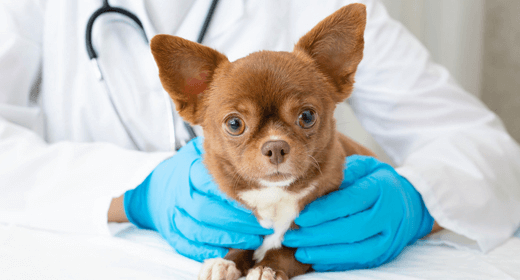
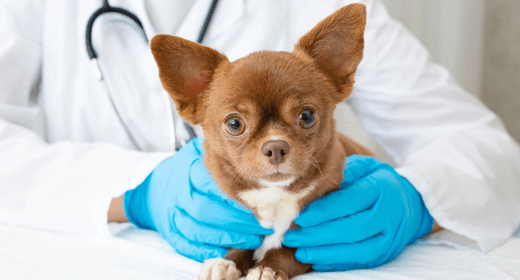
Population control is as essential for pets as it is for humans. Overpopulation by unwanted kindle of kittens or puppies is difficult to manage by caregivers. Many newborn young kittens and puppies are either put up for adoption or sent to an animal shelter. Besides, reproduction can be a tedious journey for your furry friend. Hence, it is better to get them spayed and neutered at the right time.
Spaying and neutering are medical procedures performed on dogs to stop their reproduction process. Dog neutering and spaying is one the essential medical procedures for providing care to your fur baby. There are many benefits of neutering and spaying your canine friend. To understand more about this helpful medical procedure, read the following.
A neutered or spayed dog cannot reproduce as their heat cycle is eliminated. Dog neutering is a medical procedure performed on male dogs while spaying is performed on female dogs. Veterinarian surgeons perform a surgical procedure to remove ovaries and uterus from female dogs. Besides population control, spaying also prevents uterine infections and breast cancer in female dogs. Whereas neutering is a similar procedure performed on male dogs. Neutered dogs undergo surgery for removing both testicles and associated structures. Male neutered dogs are generally believed to be more well-behaved and calmer. The surgery also stops their breeding acts such as humping and the urge to run away.
Getting your dog spayed and neutered is essential for their psychological and physical well-being and behavior. Yet, when to spay a dog and when to neuter a puppy is a common query amongst pet caregivers. Well, it is best to get your pooch neutered or spayed at the earliest. It is best to get your fur baby neutered or spayed before it develops breeding instincts. Undergoing the procedure between 4 and 6 months is suggested. Most breeds of dogs reach redevelopment maturity around 6 months of age, yet some breeds can easily be neutered or spayed until 9 months or even after they turn over a year old. Hence, your pooch’s breed and size decide how soon it needs to be spayed or neutered.
There are numerous reasons to opt for spaying and neutering for pets. By undergoing spaying and neutering procedures, pets can achieve better physical and psychological health. Neutered and spayed dogs are known to have better hormonal balance as their reproductive organs are removed which helps in neutralizing their breeding instincts. Mentioned below are a few more reasons why you should get your pets neutered and spayed.
It is necessary to take some preventive measures to build trust and assurance before getting your pooch neutered or spayed. The following are a few things you should do to prepare your canine friend before getting it neutered/ spayed.
Neutering or spaying can typically take anywhere between 20 to 90 minutes depending on the size, breed, and health of your pooch. As a pet parent, you need to ensure the best care and support for your fur baby to ensure its complete and stress-free recovery post-surgery. Puppies and dogs often take up to 10 to 14 days to recover after getting neutered or spayed. The following are a few things you should do to ensure your puppy recovers well after getting neutered or spayed.
Managing the population is essential for strays as well as pets. When you get your pets neutered and spayed, you eliminate their chances of contributing to the overpopulation of dogs. Besides, spaying and neutering also help in managing your pooch’s aggression and urge to run away by controlling their hormones and making them calmer. Neutering and spaying also save your pooch from falling prey to infections and fatal illnesses like cancer. Hence, it is best to get your canine friend neutered or spayed at the earliest by consulting a vet.