Enter a keyword below to search for articles and products.
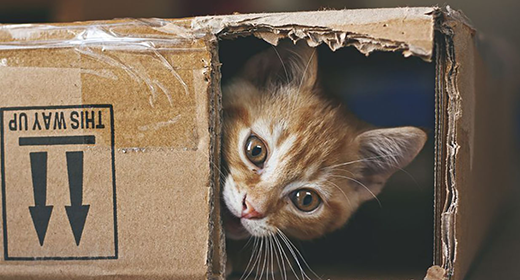
Understanding and learning how to decipher kitten food product codes will help you choose the right kitten food. While selecting the right ingredients is important, making sure those ingredients are fresh is just as vital to your young cat. Learn how to read the product codes of kitten food packages and cans with our handy guide.
A product code is a series of numbers and letters printed on the outer package of each product a manufacturer produces. This code provides information about when and where the kitten food was made.
As part of the product code, IAMS™ products include a “Best Used By” date, or the date at which the product is no longer considered fresh and should no longer be sold. This date is expressed in “ddmmyy” and “ddmmmyy” formats.
The second line of the product code represents company internal information for use in traceability and inventory control.
Line 1: (ddmmyy) (ddmmmyy)
Example: 040220 04FEB20
Line 2: 60351111## QQQQQQQ
This product should be used before February 4, 2020.
Depending on the production line, pouch products* may have code date information in a single or double line. By recognizing and understanding these codes, customers can make sure they are receiving a fresh product.
Shelf life is the duration, measured in months, during which a properly stored kitten food product maintains its freshness. This means if a product has a 16-month shelf life, it is fresh for up to 16 months from the date of manufacture.
The shelf life for IAMS dry kitten foods is 16 months. All canned formulas have a shelf life of 24 months.
Unopened dry kitten food products are best stored off the floor in a cool, dry place. Open bags of kitten food should be stored in a clean, dry container with a tight seal. Dry kitten food products may also be frozen without loss of nutrients.
Opened wet kitten food products are best kept refrigerated in tightly sealed containers for no more than three days after the container has been opened. Wet products should not be frozen in unopened cans. However, wet kitten foods can be frozen if removed from the container, packed in freezer containers and frozen immediately.
*IAMS has no kitten pouch products at this time.
A cat’s diet largely includes other smaller animals as they are carnivorous. However, most cats avoid consuming the animal’s intestinal tract which contains most fiber. This can lead to a lack of fiber in the cat’s diet. But do cats need fiber? Yes. Lack of fiber can result in irregular bowel movement, digestive issues, and other similar health concerns.
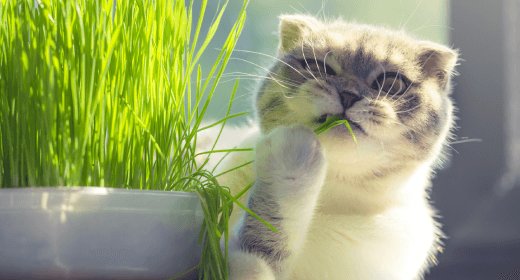
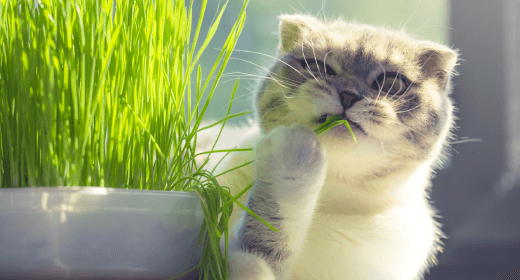
Cats often munch on green grass and leaves to ease constipation. However, they might resist including fiber in their daily meal and only rely on it when ill. But, to ensure your cat’s best physical well-being, you should choose fiber-rich food for cats.
Fiber-rich cat food is essential as it helps in maintaining their digestive health. Thus, pet parents should try to include the necessary amount of fiber in their kitty’s diet. It will help maintain their digestive health and overall well-being. Cat food fiber can be classified based on its solubility.
While choosing cat food with fiber, you should make sure it includes both soluble and insoluble fiber. Besides, the cat’s gut bacteria can break down both soluble and insoluble fiber to produce new compound that helps in nourishing their colon cells.
Fiber-rich cat food contains prebiotics, which means they also contain good bacteria that are necessary for a healthy intestine. So, as a cat parent, you should invest in high-quality cat food with fiber to keep your little fur baby’s gut health in check. However, how much fiber does a cat require??
Although fiber is essential for cats, they require it in limited quantities. Too much fiber can risk restricting absorption of nutrients in their body, whereas too little can lead to poor digestive health. The appropriate quantity of fiber for cats is between 1.4 to 3.5% of their daily calorie intake.
Planning to include cat food with fiber in your kitty’s daily diet? Consider adding the following food options to their meal to increase fiber content in your fur baby’s diet.
Besides relying on the above-mentioned plant-based and animal-based fiber, you can also buy IAMS high-fiber cat food to ensure that your kitty gets the right amount of fiber in its meal. IAMS high-fiber cat food such as IAMS ProActive Health Adult Original with Chicken contains a moderate quantity of fermentable fiber along with the chicken. This cat food with fiber is made using fermentable fiber and chicken that your cat is sure to relish. Besides, IAMS is a popular cat food brand that is known for using best-quality ingredients, so your furry friend gets nothing but the best.