IAMS PH
cat article detail banner
Tips for Feeding Your Adult Cat

adp_description_block319
Tips for Feeding Your Adult Cat

  • Share

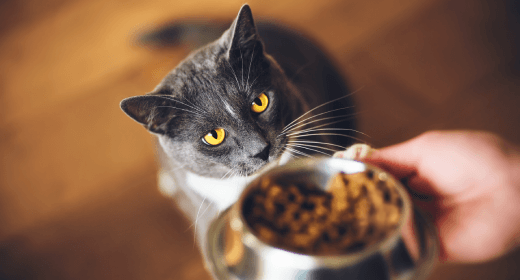
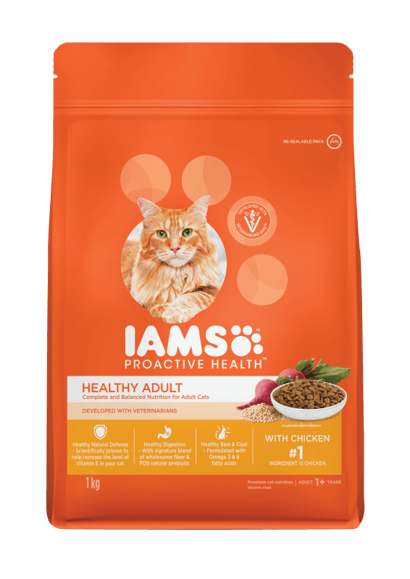
At about 12 months, your cat no longer requires the high levels of minerals, protein, and energy needed while he was a quickly growing kitten. So switch him to a high-quality food, such as IAMS™ ProActive Health™ Adult Original with Chicken, which is specifically balanced for the nutritional needs of adult cats. When choosing food, follow these steps.
 

  • Read the nutritional claims on food packages. Check the label to make sure the food is appropriate for the stage of your cat's life (kitten, adult, or senior). Also, look for a statement saying that the food meets the requirements of the Association of American Feed Control Officials (AAFCO). If your cat's food doesn't have the AAFCO’s nutritional claim on its label, there is no guarantee that your cat will get a complete and balanced diet.
  • Choose premium food. Premium cat foods, which generally use higher-quality, more easily digestible ingredients, are more nutrient-dense than the less expensive brands. So, your cat will get the calories he needs by eating less food. As a result, the difference in actual cost of feeding him premium food instead of generic may be only a couple of cents a day.
  • Consult your veterinarian. Because your cat's nutritional needs change as he grows older and certain medical conditions require a special diet, always talk with your vet about cat feeding specifics, including what–and how much–to feed your cat.


Once you've selected a food, establish healthy feeding habits.
  • Always measure the food you feed your cat. Start with the portion recommended on the package, even though the serving size may not be ideal to keep your cat healthy. If he doesn't eat all of the food or starts to gain too much weight, cut back the portions; if he begins to look thin, increase the amount until he's maintaining a healthy weight.
  • Create a cat feeding schedule. Nutritionally, one meal a day is OK for adult cats. If your cat seems hungry more often, try multiple smaller meals at established times. Remember, more mealtimes shouldn't mean more food. Split up the recommended serving size to create several meals.
  • Consider free-feeding for fit and trim pets. Leaving dry food available all day so your cat can nibble whenever he likes will work if he's at a healthy weight. If he's overweight or overeats, or you can't gauge how much he's eating because other pets share his food, it's best not to leave food out.
  • Ban table scraps and limit treats. Not only are they high in fat and calories, but they also can interfere with the correct—and complete—nutrition your cat is getting from his food.
  • Introduce new food gradually. Whenever you want to begin your cat on a new food, mix it in with the old. Start with a small amount of new food and increase the percentage over several days. Cats are more likely to accept change if it happens slowly, and their digestive systems are less likely to be upset.
  • Keep fresh water in a clean bowl available at all times. Cats need water to help regulate their body temperature, digest their food, and eliminate waste, among other things. Providing plenty of fresh water is especially important if your cat eats only dry food or is prone to urinary tract blockages.

  • Myths About Feeding Your Kitten a Raw Meat Diet
    Myths About Feeding Your Kitten a Raw Meat Diet
    adp_description_block377
    Can Kittens Eat Raw Meat?

    • Share

    Cats are carnivorous animals who typically depend on meat protein for their regular growth and development. But can kittens eat raw meat? Well, while cats do enjoy feasting on meat from other animals, they should do so only after a certain age. Younger kittens generally do not have the metabolism and capacity to digest raw meat. Hence, pet parents should start a raw diet for kittens only once they turn 3 to 4 weeks old.

    Is raw meat good for kittens?

    Although cats relish their portion of raw meat, feeding it to kittens is a totally different topic. Since kittens are still at a developing stage, they are more sensitive and need additional care. Yet, feeding raw meat to kittens is not an unheard practice. However, uncooked and unprocessed raw meat often carry harmful microbes which may hamper the kitty’s health. Hence, it is not recommended to feed raw meat to kittens.

    Why can’t kittens eat raw meat?

    While there is no evidence that raw meat offers more nutrition than other types of cat food (and vice versa), here are two reasons why kittens shouldn’t eat raw meat:

    • Infectious bacteria

    Raw food is not recommended for cats because it contains bacteria like Salmonella and listeria. These bacteria can make both the pet as well as caregivers sick. And it is no news that food-borne diseases can at times be fatal.

    • Bone pieces

    Raw meat often contains small bone pieces and that can be dangerous for the kitten. These pieces can cause intestinal blockage. In fact, they can even cut the insides of your pet’s digestive system. Moreover, bone pieces can also fracture the cat’s teeth. If your cat is an aggressive chewer, feeding raw meat with bones could even break your feline friend’s tooth.

    Alternatives to raw meat for cats

    Now, as a cat parent, you might assume that home-cooked food is the best choice for your cat. However, it is a daunting and time-consuming process. You will have to understand cat’s feeding needs to ensure that it meets the daily nutrition quota. Along with protein, our feline family member also needs essential micronutrients like iron sodium, chloride, magnesium, etc. Hence, going for wet cat food products and kibbles is a feasible option. It saves you the effort of cooking food every day while also offering complete nutrition to your pet. Let’s explore the benefits of feeding wet cat food and kibbles to your cat:

    Wet cat food

    • It contains 78% moisture; hence, wet cat food keeps dehydration at bay.
    • Since wet cat food is made using animal protein, it offers essential amino acids like taurine to cats.
    • Cat food brands like IAMS understand a cat’s nutritional needs. Hence, you do not have to worry about your pet’s diet being high on carbs.
    • Micronutrients are essential for a healthy immune system. Therefore, wet cat foods are loaded with chloride, potassium, magnesium, iron, vitamins, etc.

    Kibbles

    • Kibbles work well with dispenser toys; hence, they can be used to provide mental stimulation.
    • Since this type of cat food is dry and crunchy, it reduces plaque and tartar build up.
    • Kibbles have a better shelf life and are easy to store as well as serve.
    • If your cat is malnourished, this high-calorie food will help your pet gain the necessary weight and energy.

    Note: Get in touch with your vet to make sure you feed the right quantities of both wet and dry cat food to your pet. 

    At IAMS, we offer dry cat food and kibbles that are made with premium-quality meat like chicken, tuna, and salmon. Along with being rich in protein, our range of cat food is also loaded with essential vitamins and minerals for cats.

    What should you do if your cat eats raw meat?

    If your cat accidently eats raw meat, take it to your vet as soon as possible. Cats exhibit the following symptoms every time they eat something their system doesn’t accept:
    • Vomiting
    • Diarrhea
    • Lack of appetite
    • Lethargy

    Myths About Feeding Your Kitten a Raw Meat Diet
    Myths About Feeding Your Kitten a Raw Meat Diet
Close modal