Enter a keyword below to search for articles and products.
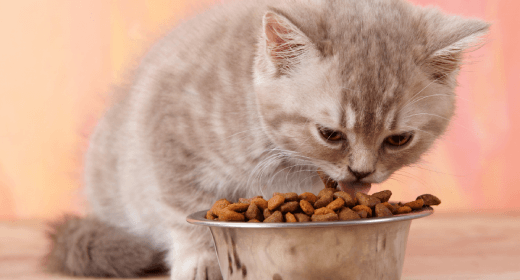
Cats are carnivorous animals who typically depend on meat protein for their regular growth and development. But can kittens eat raw meat? Well, while cats do enjoy feasting on meat from other animals, they should do so only after a certain age. Younger kittens generally do not have the metabolism and capacity to digest raw meat. Hence, pet parents should start a raw diet for kittens only once they turn 3 to 4 weeks old.
Although cats relish their portion of raw meat, feeding it to kittens is a totally different topic. Since kittens are still at a developing stage, they are more sensitive and need additional care. Yet, feeding raw meat to kittens is not an unheard practice. However, uncooked and unprocessed raw meat often carry harmful microbes which may hamper the kitty’s health. Hence, it is not recommended to feed raw meat to kittens.
While there is no evidence that raw meat offers more nutrition than other types of cat food (and vice versa), here are two reasons why kittens shouldn’t eat raw meat:
Raw food is not recommended for cats because it contains bacteria like Salmonella and listeria. These bacteria can make both the pet as well as caregivers sick. And it is no news that food-borne diseases can at times be fatal.
Raw meat often contains small bone pieces and that can be dangerous for the kitten. These pieces can cause intestinal blockage. In fact, they can even cut the insides of your pet’s digestive system. Moreover, bone pieces can also fracture the cat’s teeth. If your cat is an aggressive chewer, feeding raw meat with bones could even break your feline friend’s tooth.
Now, as a cat parent, you might assume that home-cooked food is the best choice for your cat. However, it is a daunting and time-consuming process. You will have to understand cat’s feeding needs to ensure that it meets the daily nutrition quota. Along with protein, our feline family member also needs essential micronutrients like iron sodium, chloride, magnesium, etc. Hence, going for wet cat food products and kibbles is a feasible option. It saves you the effort of cooking food every day while also offering complete nutrition to your pet. Let’s explore the benefits of feeding wet cat food and kibbles to your cat:
Note: Get in touch with your vet to make sure you feed the right quantities of both wet and dry cat food to your pet.
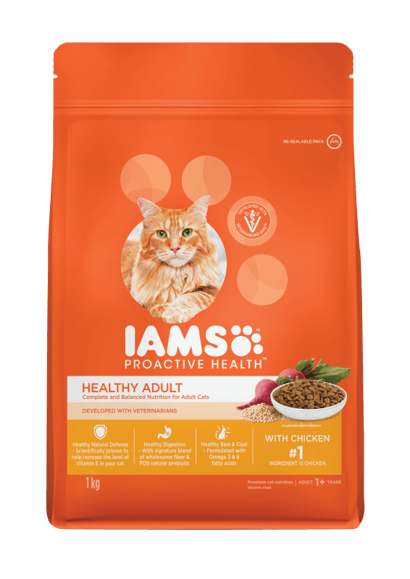
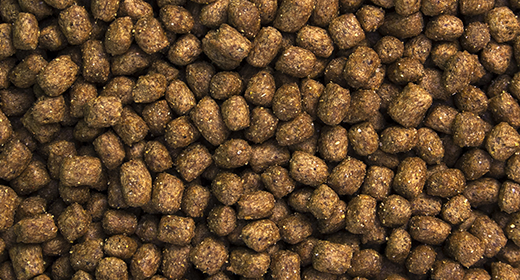
At IAMS, we offer dry cat food and kibbles that are made with premium-quality meat like chicken, tuna, and salmon. Along with being rich in protein, our range of cat food is also loaded with essential vitamins and minerals for cats.
If your cat accidently eats raw meat, take it to your vet as soon as possible. Cats exhibit the following symptoms every time they eat something their system doesn’t accept:
If a cat eats raw meat, it can lead to food-borne diseases, digestive issues, and tooth fracture.
No, raw food is not safe for kittens as it often contains infectious bacteria and small bone pieces that can cause fatal health problems.
Since kittens are still at a growing stage, their immune system is not strong enough to fight harmful bacteria present in raw meat. Hence, it is not recommended to feed any kind of raw meat to kittens.
No. Kittens shouldn’t eat raw chicken as it can cause severe health problems. Since cats are carnivores, they require animal protein for sustenance. Hence, cat parents should opt for wet and/or dry cat food that are developed to support your pet’s overall health.
Before you assume that by-products in kitten food are bad thing, here are some facts. In common usage, a by-product is something that is just that—a side product from the making of another product. By-products are not by definition poor quality. For instance, gingerbread cookies wouldn’t be the same without molasses, which is a by-product of sugar manufacture.
In relation to IAMS™ kitten foods, such as IAMS ProActive Health™ Kitten, by-products are generally parts of the animals that are not the muscle meat preferred by most American consumers. The term refers only to the anatomic parts included, not to the nutritional quality of the parts.
While many Americans may not be used to eating these animal parts themselves, it is important to realize that many of the items included in by-products (e.g., organ meats) may be higher in essential nutrients—amino acids, minerals, and vitamins—as well as more palatable to pets than the skeletal muscle meat.
In addition to nutritional benefits, inclusion of these ingredients in pet foods reduces waste and likely has environmental benefits as the livestock industry does not have to produce additional animals just to satisfy the needs for muscle meats to feed pets as well as people. Feeding these nutrient-rich, tasty parts to pets may prevent them from being wasted and allows the entire animal to be put to good use.
Much of the consumer confusion and discomfort surrounding by-products most likely stems from the marketing strategies of some pet food brands and perhaps from the ingredient name “by-product” itself.
It is important to keep in mind that most ingredients in pet foods can vary greatly in quality. In addition, quality cannot be assessed purely on the basis of the ingredient list. All by-products are not the same quality. Neither is all muscle meat. There are very high-quality by-products as well as poor-quality chicken and chicken meal (or beef or pork).
Purchasing food only from reputable manufacturers who are very selective about their suppliers, have full-time, qualified nutritionists, and perform analytical testing to ensure that every ingredient, as well as the finished product, meets their exact nutrient specifications, will help avoid problems due to poor-quality ingredients.