Enter a keyword below to search for articles and products.
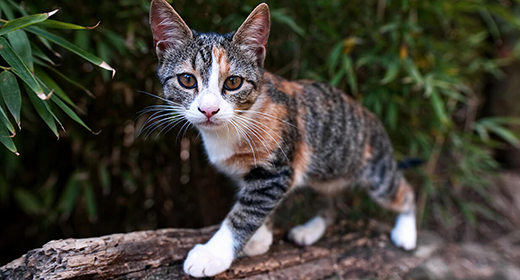
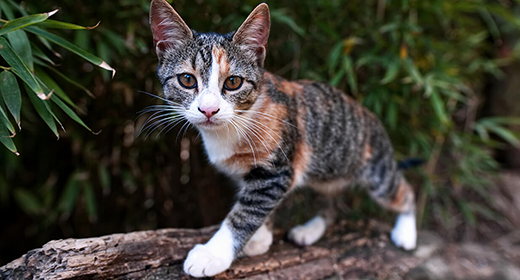
We include fish oil in IAMS™ dry kitten food to help promote healthy skin and a healthy coat in your kitten. Learn more about fish oil and meal, what it does, how it can help your kitten and why it is an important component in all IAMS dry kitten foods.
Fish oil is extracted from fish and is composed of special types of fats. Fish meal, which is used in IAMS dry kitten foods, is a good source of natural fish oil.
Fish oil from deep, cold-water fish contains omega-3 fatty acids. Fatty acids are a smaller component of fat, and omega-3 fatty acids are a type of fatty acid with important nutritional value. Fish oil has a unique fatty acid composition with high concentrations of long-chain omega-3 fatty acids, such as eicosapentaenoic acid (EPA) and docosahexaenoic acid (DHA).
The fatty acids in a kitten’s diet are incorporated into the body’s tissues and are critical for many body functions. For instance, animal cell membranes, including those in the skin, contain fatty acids. Omega-3 fatty acids are responsible for the production of substances that promote healthy skin conditions, especially when balanced with omega-6 fatty acids (found in common ingredients such as chicken fat and corn oil) in a ratio between 5:1 and 10:1.
All IAMS dry kitten foods, such as IAMS™ ProActive Health™ Healthy Kitten, contain fish oil as a high-quality source of omega-3 fatty acids.
Studies conducted by nutritionists at The IAMS Company found significant improvements in skin and coat when cats1 were fed a diet that contained omega-3 fatty acids in a balanced ratio with omega-6 fatty acids versus the same diet without the balanced ratio.
Feeding a complete and balanced diet with a balanced ratio of omega-6 and omega-3 fatty acids is proven to promote healthy skin and a shiny coat. When fed fish oil, cats showed:
1 Data on file, The IAMS Company, 2000.
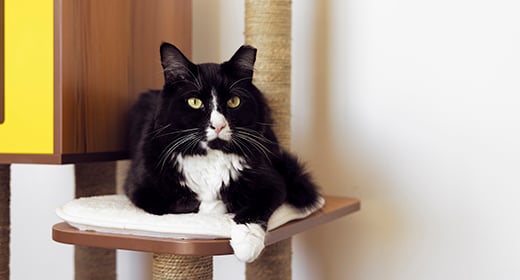
Cats are generally considered to be low-maintenance pets. However, that’s nothing but a myth. You need to care for a cat the way you would care for any baby, especially with regards to its health and overall well-being. Although medical treatments are available for most feline illnesses, prevention is always better than cure. Cat vaccinations, such as the anti-rabies and FVRCP vaccine, protect your furry friends from deadly infections like rabies. But did you know? These diseases are transmissible to humans as well. Yes. So, when you vaccinate your cat against such medical conditions, you also reduce the possibility of contracting fatal diseases from your own pet.
Feline vaccines are scientifically developed to boost the cat’s immunity and fight fatal diseases. Even though there is no ‘one size fits all’ protocol for immunization, veterinarians suggest cat injections depending on your pet’s age, overall health, lifestyle, and breed. Moreover, these vaccinations are primarily divided into two categories – core vaccines and lifestyle vaccines. Core vaccines are essential for every cat irrespective of their lifestyle, breed, and region. Lifestyle vaccines are given to cats after considering certain circumstances.
Administering rabies and other precautionary vaccines from a young age protects cats from falling prey to serious diseases. Mentioned below are essential cat vaccinations that every kitty must get:
These are anti-rabies vaccines for cats. They are given annually or once in 3 years – depending on the type of vaccine you choose – to protect your kitty from the fatal rabies virus. While this disease is fatal for your feline friend, it can also prove terminal for humans. Rabies often spreads through bites or scratches of infected animals. And rabies patients develop signs of aggression, disorientation, and hydrophobia post incubation stage. If not treated in time, rabies often results in fatal consequences for both animals and humans. Hence, anti-rabies vaccines for cats are a must from a young age.
These are 3-in-1 vaccine for cats. FVRCP vaccine prevents cats from three different viruses – feline rhinotracheitis virus, calicivirus, and feline panleukopenia virus. Instead of getting the kitten inoculated three times, you can simply get the FVRCP vaccine. This 3-in-1 vaccine for cats is recommended annually to protect them from highly infectious diseases.
Protect your kitty from leukemia virus by getting them vaccinated. This disease can spread through body fluids like urine, saliva, and feces; hence, FeLV infects cats while grooming or sharing a bowl with an infected cat. This fatal virus can process into various associated conditions such as anemia, lymphoma, or immunosuppression. Hence, the FeLV vaccine is recommended for cats from a very young age. This vaccine consists of two doses spaced three to four weeks apart for kittens and is followed by revaccination a year later for adult cats.
An FPV vaccine also protects your cat from feline panleukopenia. Kittens should receive an FPV shot once they turn 6-8 weeks old. You should also revaccinate your four-legged angel every three to four weeks until the age of 16 weeks. After this, a booster dose should be given between the ages of 1 to 2 years.
Developed to combat 4 diseases, 4-in-1 vaccine for cats protect against rhinotracheitis, calicivirus, panleukopenia, and chlamydia. These 4-in-1 cat vaccine are also called 4-way vaccines or FVRCCP. Feline chlamydia is part of the feline upper respiratory complex and an underlying cause of most early ocular infections. Hence, kittens should receive 4-in-1 vaccine for cats at the age of 8, 12, and 16 weeks, and a revaccination once they turn a year old. Cat parents are also suggested to revaccinate their kitty every 3 years to keep their purrfect pal hale and hearty.
F5 or Fevac 5 vaccines are 5-in-1 vaccines for cats that boosts your kitty’s immune system to tackle five viruses. Getting your kitty inoculated for this combination will ensure that it is safe from a range of fatal illnesses.
Vaccines are built to boost immunity and fight deadly illnesses. However, after getting vaccinated, your kitty might show mild signs of discomfort and other symptoms. These signs and symptoms are nothing but proof that its body is building a defense mechanism to defeat deadly viruses. Side effects of anti-rabies, FVRCP vaccine, or other combination vaccines for cats may include the following symptoms:
Lethargy
Loss of appetite
Vomiting
Fever
Diarrhea
Swelling and redness around the injected area
Ensuring that your feline friend is vaccinated from time to time aids in keeping them healthy and lively. Hence, every cat parent is recommended to plan a proper vaccination schedule for their fur babies.