IAMS PH
How Nutrition Can Help Manage Your Cat’s Hairballs

adp_description_block60
How Nutrition Can Help Manage Your Cat’s Hairballs

  • Share

Why Make a Hairball Management Formula?

  • Most cats are susceptible to hairballs due to continual ingestion of hair during regular self-grooming.
  • Cat owners have told us that hairballs are one of their top concerns.
  • According to IAMS™ consumer research, a number of cat owners and their cats have found hairball treatments to be an unpleasant experience.


How Were the IAMS Hairball Formulas Developed?

IAMS nutritionists were looking for a way to control hairball formation while maintaining optimal feline health and well-being. They evaluated risk factors for hairball formation in cats fed diets that varied in fiber source and content.

  • 98 cats were studied.
  • Nine groups were fed test diets and three were fed control diets.
  • The test-feeding period was six to seven weeks, following a five-week control-feeding period.
  • Total cat-days of testing = 9,968.


Researchers found that feeding diets that contained a blend of beet pulp and cellulose was more effective at moving hair through the digestive tract, compared with the same diets containing beet pulp as the only fiber source.

  • There was an 80% to 100% increase in fecal hair excretion with beet pulp/cellulose-blend diets, compared with the beet-pulp-only diet.
  • By promoting the passage of hair ingested by the cat during normal self-grooming, an important risk factor for hairball formation is minimized.
  • Hairballs were not evident in cats fed the beet pulp/cellulose-blend diets.


How Do IAMS Hairball Formulas Work?

  • The fiber system (blend of beet pulp/cellulose) gently moves hair through the gastrointestinal tract while maintaining healthy digestion.
    • Beet pulp, a moderately fermentable fiber, promotes optimal intestinal health.
    • Cellulose helps to enhance the passage of ingested hair.
  • An optimal fatty acid ratio enhances skin and coat health, which decreases the likelihood of excessive shedding, a factor related to hairball formation.


How Do IAMS Hairball Formulas Compare with Other IAMS Cat Food Formulas?

IAMS hairball formulas provide high-quality nutrition and taste, like our other adult formulas, with the added benefit of reducing the risk of hairballs.
  • High-quality nutrition for adult cats
    • Optimal protein and fat levels
    • Higher fiber content due to added cellulose
    • Excellent stool quality, skin and coat condition, and taurine status
  • Great taste
    • Similar acceptability and palatability test results as other IAMS adult formulas

  • Tips for Feeding Your Senior Cat
    Tips for Feeding Your Senior Cat
    adp_description_block476
    Comprehensive Guide to Feeding Senior Cats

    • Share

    Cats are known for their graceful demeanor and independent attitude. Their average lifespan is approximately 12 to 18 years. Cats over 3 years of age are deemed adults, and from the age of 11 years, they become senior cats.

    Like most animals, cats’ eating habits also change with age - - kittens often need more food as they require more energy, and adult cats require a moderate amount of food to have sufficient energy. Senior cats often have a smaller appetite compared to their younger counterparts. Therefore, pet parents should keep track of their cat’s changing food requirements. Read the following if you too have queries related to feeding cats or how to feed older cats.
     

    Why pay special attention to senior cats’ diets?

    Your senior cat’s health and well-being are directly linked to their eating habits. Cat caregivers need to be more vigilant while feeding senior cats to ensure that their feline friend is provided with the right amount of nutrition and nourishment. 
     

    As a pet parent, you need to be mindful when feeding your cat. It has different nutritional requirements at various stages of its life. Kittens need to be fed with uttermost care to ensure appropriate growth and development, adult cats need well-monitored feeding portions to avoid overeating, and senior cats need a regularized diet to maintain their health. Hence, senior cat food contains high-quality protein and added vitamin E for more bone and joint strength.
     

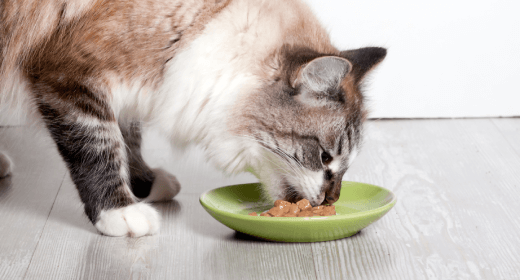
    As cats grow older, their sense of taste and smell begin to fade. Senior cats also experience deteriorating teeth which affect their ability to chew. Hence, older cats’ caregivers need to take the following measures while feeding them:

    • Feed small bite-sized pieces of food instead of larger chunks
    • Include softer food so that it is easier for your senior cats to properly chew the food

    • Add food with higher meat content to enhance the food’s smell and flavor
       

    Tips for feeding cats

    An old kitty or senior cat may need a small quantity of food with higher nutrients. Cat feeding tips help pet parents to provide the right nutrition and nourishment to their senior kitty. Here are a few essential tips that caregivers should consider when feeding their senior cats:
     

    1. Smaller meals:

       As the cats grow older, their appetite decreases. However, they still need high amounts of protein and vitamins to meet their daily nutritional quota. Therefore, if your senior cat has digestive issues, feed it at least 10 to 12 times a day, whereas healthy older cats should be fed three to four times a day.
    2. Room temperature food: 

      Instead of serving food too hot or too cold, pet parents should serve it in normal room temperature. As older cats find it difficult to smell, room-temperature food helps them taste and smell the food better.
    3. High-quality:

       Feed only high-quality easy-to-digest food to adult and senior kitties. Good quality cat food contains vital nutrients such as protein, carbohydrates, vitamins, and moisture to suffice your senior kitty’s nourishment needs.

      Even though the food requirements of cats depend on the kitty’s age, you should also take their health condition, weight, appetite, and lifestyle into consideration. Pet parents are also recommended to consult a veterinary doctor to understand their kitty’s health requirements, nutritional deficiencies, and underlying diseases before selecting a diet plan or senior cat food brand.


Close modal