Enter a keyword below to search for articles and products.
Linoleic acid, a naturally occurring omega-6 fatty acid found in common pet-food ingredients such as corn and chicken fat, is a required nutritional component of the canine and feline diet.
Fatty acids are the building blocks of dietary fat and are formed by specific combinations of carbon, hydrogen, and oxygen.
Certain groups of fatty acids, called omega-3 (fatty acids in which the first double bond is located at the third carbon atom) and omega-6 (fatty acids in which the first double bond is at the sixth carbon atom), are particularly important to various functions in the cat's body.
The first double bond is located at the sixth carbon atom and, therefore, is an omega-6 fatty acid.
Omega-6 fatty acids are essential for maintenance of skin and coat condition, normal growth, proper membrane structure, and absorption of fat-soluble vitamins.
Linoleic acid is the most important omega-6 fatty acid because it cannot be synthesized by cats, and it is used to make other omega-6 fatty acids.
Cats also require arachidonic acid, because they cannot synthesize it from linoleic acid.
Most pet foods contain more than the required amount of linoleic acid. However, IAMS research shows that it is not just the amount, but the ratio of omega-6 to omega-3 fatty acids, that is most beneficial to cats.
The optimal omega-6:omega-3 fatty acid ratio to maintain a healthy skin and coat in dogs and cats is between 5:1 and 10:1, so five to 10 omega-6 fatty acids should be present for every one omega-3 fatty acid.
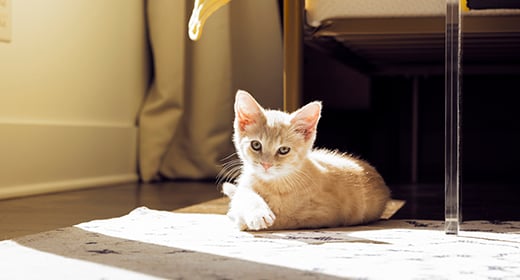
Rabies is a dangerous virus that affects the warm-blooded animal kingdom. It spreads through the bite or starch of an infected animal, making the infection easily transmissible amongst animals and humans alike. Since there is no effective rabies treatment yet, the only solution to combat this fatal virus is through vaccination. Veterinarians recommend anti-rabies vaccine for pets to protect them and their humans from this deadly virus.
Anti-rabies vaccine is one of the core vaccines for cats, in addition to the 4-in-1 cat vaccine. It helps prevent the cases of rabies in cats and kittens, contributing to the overall health of your feline friend. However, before getting your cat vaccinated with rabies injections, it is essential to know a few details about this disease and how to prevent it. So, let’s dive right into it.
The rabies virus depends on the host body for survival. As the virus cannot survive outside of the host body, it spreads through open wounds and mucous membranes in the eye, mouth, and nose. The virus transmits through the saliva of the infected animal. If a rabies carrier bites or starches your pet, then it too becomes infected with the virus. Typically, the incubation for rabies in cats ranges from a few days to a few years.
Since rabies is a deadly infection, it is imperative that you, as a cat parent, watch out for its symptoms. So, let’s take a look at a few signs of rabies in cats:
Fever
Lethargy
Low appetite
Difficulty breathing
Hypersalivation
Difficulty swallowing
Abnormal behavior
Curing rabies is not an option post-incubation as there is no proper medication available in the market yet. Hence, keeping this fatal infection at bay is of paramount importance. And how can you do that? By ensuring that your cat is vaccinated with an anti-rabies injection.
Anti-rabies vaccine for cats is a must. Veterinarians monitor rabies shots for both indoor and outdoor cats. While there is a misconception that rabies vastly affects dogs, it can find its way to cats and other warm-blooded animals as well. Cat’s rabies vaccination prepares your indoor kitty to fight the deadly virus. Hence, do not skip on annual booster shots for both indoor and outdoor cats.
While you may think, your indoor cat is safe from the fatal disease, it is best to ensure complete healthcare for its overall well-being. Cats often socialize with outside cats by licking, sniffing, or starching each other. Indoor cats can get the rabies virus if they socialize in this manner with an infected outdoor or stray cat. Anti-rabies vaccination is the best way to avoid any remote possibility of your kitty getting infected. It builds antigens in the cat’s body, so your fur baby can tackle the rabies virus.
Various brands offer anti-rabies vaccines for cats in the market. Hence, it is best to seek a veterinarian’s advice regarding vaccination. They will take multiple factors, such as your kitty’s age, breed, and lifestyle, into consideration before recommending a brand. Similarly, when it comes to the frequency of taking the anti-rabies vaccination, it all depends on the type of vaccine recommended for your pet. If your vet recommends an adjuvant vaccine, your cat might have to be inoculated once every year. On the other hand, if they suggest a non-adjuvant vaccine, you must note that these vaccines are generally administered once in three years.
Anti-rabies vaccine is one of the core vaccinations for cats. It prepares your cat to fight the virus by boosting immunity. The first dose of the anti-rabies vaccine is administered once the kitty turns 12 weeks old. After the initial dose, depending on the type of vaccine, you will need to get your feline friend vaccinated either annually or once in three years.
As a cat parent, you must know the potential side effects of this vaccine. So, let’s take a look at them:
Low-grade fever
Lethargy
Low appetite
Swelling and redness at the injected site
Cat parents should monitor not only the anti-rabies vaccine but also other core vaccines like 4-in-1 cat vaccine, FeVac 5, and 3-in-1 cat vaccine. Regular vaccination and annual health check-ups ensure your kitty leads a healthy life. So, ascertain that you provide your fur baby with all the care it requires.