Enter a keyword below to search for articles and products.
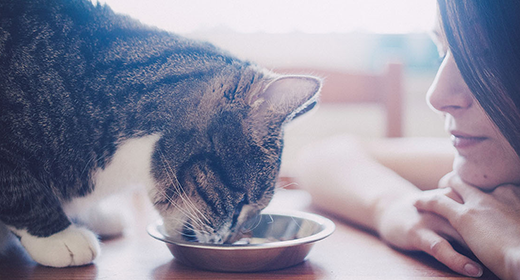
Why move your nearly grown kitten to a premium adult cat food? Because quality counts. It's crucial to continue the superb nutrition she's been getting from a premium kitten food into adulthood. Downgrading to a basic nutrition brand at this stage of her life may upset her digestive system and certainly won't provide her with the same type of nutrition she was raised on.
Think of a baby. When it's time to start giving him solid food, you wouldn't feed your child anything less than the best nutrition you can buy. The same is true for your maturing kitten. She needs the best age-appropriate food there is to help maintain overall health. Premium foods such as IAMS are formulated to meet all her needs and provide additional benefits.
They're specifically designed to provide your cat with a formula that features:
High-quality ingredients
Balanced, optimal levels of protein, fat, moderately fermentable fiber, carbohydrates, vitamins, and minerals, which make costly supplements unnecessary
High-quality recipes and great taste
Standards that meet or exceed Association of American Feed Control Officials standards
Nutrient-dense formulas that are right for each life stage
Product guarantees
What do all of these features add up to? A happy, healthy cat. With premium cat food, you can expect to see these important indicators of good health. They contribute to providing your cat with a long, healthy life:
Exceptional muscle tone
A shiny, luxurious coat
Healthy skin and bones
Clear, bright eyes and clean teeth
Small, firm stools
Founded upon decades of research, premium formulas from IAMS help maintain your cat's health and help provide him with the nutrition he needs for a long life. Generic brands simply may not match the level of expertise that goes into every bag of IAMS cat food.
When your cat is about 12 months of age, it's time to change her diet to a premium maintenance formula. When you transition your cat to an adult diet, it's important to monitor her weight and body condition and adjust portions if necessary.
Because cats generally eat only what they need, free-choice feeding is adequate for most cats. (Free-choice makes food available to your cat around the clock and lets her eat when and how much she needs.) Indoor cats that don't get much exercise, however, may overeat if fed free-choice. For them, portion-controlled feeding twice a day is a better routine.
To determine how much food to give your cat, check the recommendations of the pet food manufacturer on the label. Use the guidelines and weigh your cat on a weekly basis. If your cat is gaining or losing weight and shouldn't be, slightly adjust her daily intake and weigh her again the following week.
To avoid intestinal upsets, make the change from a kitten formula to an adult diet over a period of four days with the following method:
Day One: Fill your cat's dish with 75% kitten food and 25% adult food.
Day Two: Mix adult and kitten food in a 50/50 ratio.
Day Three: Feed your cat a mixture that's 75% adult food and 25% kitten food.
Day Four: Switch to 100% adult formula.

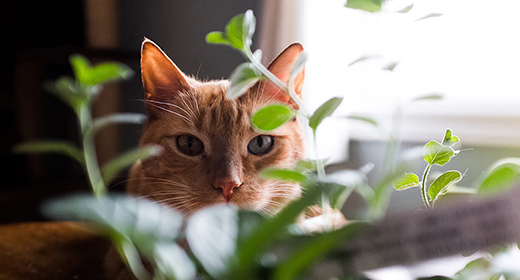
When a cat's body gets sensitive to its environment, it develops allergies. So, if you notice that your cat is feeling unwell and is constantly sneezing or scratching itself, it could be due to cat allergy reactions. These allergens are unpleasant substances that may or may not irritate you, but when your cat's body tries to rid itself of them, it may exhibit a variety of symptoms.
While it’s normal for cats to show different symptoms depending on the allergy, those that affect their breathing are the most serious ones. So, if your cat suffers from breathing issues due to allergies, it can take a life-threatening turn. Sometimes, the itchiness can also cause skin irritation leading your cat to chew on its paws or tail relentlessly.
Fortunately, cat allergy is treatable once the allergen affecting your cat is identified. Therefore, knowing how to detect if your cat has allergies and what’s causing these allergies can help you prevent problems in the future.
The first step toward treating your cat’s allergies is finding out what’s causing them. A visit to the veterinarian is the simplest way to identify your cat’s allergy stimulus.
Causes of cat allergies could be due to several reasons, all of which fall under one of the three categories. These categories are, namely – flea allergy, food allergy, and environmental allergy (atopic dermatitis).
One of the most common cat allergy signs is flea allergies. These allergies are generally caused by flea bites or flea treatment medicine. Excessive itching is the most predominant symptom of this type of allergy. It's likely that your cat is allergic to fleas if you find it scratching or frequently chewing on its fur, especially directly above the tail.
Food allergies in cats can cause vomiting, diarrhea, and even itchy skin, especially around the neck and head. This type of allergic response might cause your cat to shed patches of fur in severe circumstances. In such extreme cases, your vet can help you detect which foods are causing irritation and develop an appropriate diet for your cat.
Environmental allergies may have different triggers, including plants, pollen, and mold. This type of allergy can also be induced by cleaning products, or the fragrance included in some types of cat litter. Another type of environmental allergy is feline atopy. It is commonly known as feline atopic dermatitis, a severe allergic reaction in cats that causes extreme itchiness in their skin. As a result of this condition, your cat may suffer from skin soreness, redness, scabbing, and even hair loss.
Depending on the kind of allergy your cat has, symptoms can range from unpleasant to life-threatening.
Diarrhea is frequently related to staining of the fur around the hind end in some breeds. In normal cats, you can observe some variation in the consistency of their stool. Dietary changes can also cause temporary changes in their stool. But, if you notice frequent semi-liquid or liquid stools for more than two days, you should consult your vet.
There are different causes to why a cat makes a wheezing sound. It could be due to a hairball stuck in its stomach or allergens like pollens, mold, or cigarette smoke. However, this wheezing sound can also be linked to discomfit or stress. Because each cat's triggers are unique, it's critical to be aware of the surroundings and activities in your cat's environment that could be causing stress-related wheezing.
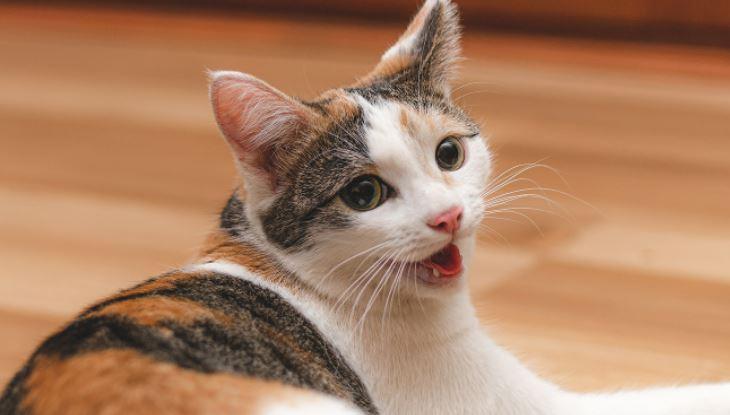
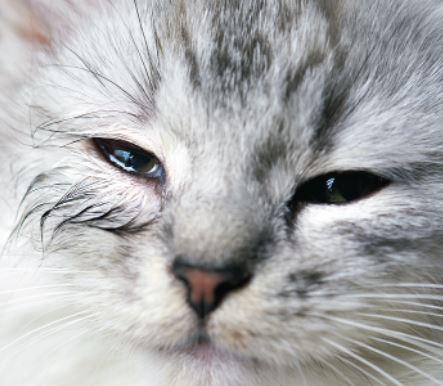
Watery or glossy-looking eyes are other prominent cat allergy signs. While a cat's moist eyes maybe caused by allergens such as mildew dust or household cleaning products, it could also indicate something more serious, such as a bacterial illness or virus.
Itchiness or skin redness in cats is associated with a skin condition called cat dermatitis. When this happens, your cat’s skin becomes swollen, red, and irritated, often with small blisters, as a result of an external agent directly irritating the skin or causing an allergic reaction to it.

If your cat is suffering from moderate allergy symptoms with only limited itching, medicated shampoos or rinses can help.
Anti-itch and anti-inflammatory medicines such as corticosteroids are particularly effective in treating extreme itchiness in cats. When used correctly, they can be quite safe and effective in cats. Consult your vet to identify the best course of action.
Treating your cat with flea preventatives will prevent your cat from being bitten by fleas. Plus, to lessen the chances of your cat being bitten, you should treat your home during the warmer months when fleas are more frequent. In fact, even cats who aren't allergic to fleas should use a flea preventative to avoid tapeworm and other flea-related illnesses.
To figure out which food is causing your cat's allergies, you must first put it on an elimination diet. After that, gradually reintroduce food items until you find the problematic allergen. The top three allergenic protein sources are beef (18%), fish (17%), and chicken (5%). Avoiding these foods will enable your cat's allergic reaction to be less severe.
The most common allergy symptoms in cats are skin reactions, regardless of the cause, and they can appear at any age. Just because your cat didn’t have allergies as a kitten doesn’t mean she won’t have them as an adult. If your cat suffers from any of the following symptoms, take her to the vet for a consultation:
Allergies can vary from cat to cat, so it is important that you work with your vet to make sure your cat gets the best possible treatment. You’ll both be happier as a result.