Enter a keyword below to search for articles and products.
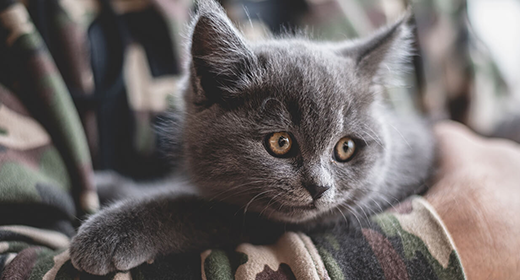
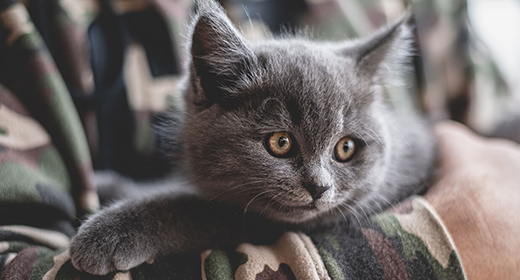
How can you help your kitten live a long and healthy life? Although you can’t predict the health of your cat with certainty, you can increase the probability of both her general health and a long life through proper care that begins as soon as you bring her home. Your veterinarian can advise further on these five key considerations for taking care of your kitten.
Feed your kitten high-quality food designed to meet nutritional needs during specific stages of her life. Your kitten’s nutritional requirements will depend on her life stage and lifestyle. No matter the life stage, cats are carnivores and require nutrients from animal protein and fat for optimal health.
Prevent obesity with prudent portion control and frequent play activities. Exercise relieves stress, reduces aggression and keeps cats alert. Just 15 to 30 minutes of play a day can help keep your cat in shape and strengthen the bond between the two of you. In addition, getting your kitten used to playtime early on will help you get used to playing with your cat routinely.
Keep your kitten inside to help reduce the risk of illness or injury from accidents, fights and disease. As your kitten gets older, you can help avoid the stress of harassment from other animals by keeping your kitten inside. You should make your home safe by protecting your cat from environmental dangers, such as household cleaners and secondhand smoke. Cats frequently groom themselves with their tongues, and over time, even small amounts of harmful chemicals can have adverse effects.
Groom your kitten early and often to get her used to brushing. When brushing, check for bumps or abnormalities, and promptly seek veterinary advice if you discover anything suspicious. Take your cat to the veterinarian at least annually for a complete physical exam, and follow your veterinarian’s advice regarding preventive health care measures.
Your veterinarian may also recommend periodic professional cleaning of your cat’s teeth, which may preserve years of her life.
Last but not least, give your cat lots of love! Despite some cats’ aloof demeanor, all cats thrive on affection. Both you and your cat will reap the benefits of spending quality time together.
It was once thought that one year in the life of a cat was equivalent to seven years of a human life. Below is a revised way of looking at how a cat year stacks up to a human year.
| Cat Age | Human Age |
|---|---|
| 6 months | 10 years |
| 8 months | 13 years |
| 10 months | 14 years |
| 1 year | 15 years |
| 18 months | 20 years |
| 2 years | 24 years |
| 3 years | 28 years |
| 4 years | 32 years |
| 5 years | 36 years |
| 6 years | 40 years |
| 7 years | 44 years |
| 8 years | 48 years |
| 9 years | 52 years |
| 10 years | 56 years |
| 11 years | 60 years |
| 12 years | 64 years |
| 13 years | 68 years |
| 14 years | 72 years |
| 15 years | 76 years |
| 16 years | 80 years |
| 17 years | 84 years |
| 18 years | 88 years |
| 19 years | 92 years |
| 20 years | 96 years |
| 21 years | 100 years |



Cats are carnivorous animals who typically depend on meat protein for their regular growth and development. But can kittens eat raw meat? Well, while cats do enjoy feasting on meat from other animals, they should do so only after a certain age. Younger kittens generally do not have the metabolism and capacity to digest raw meat. Hence, pet parents should start a raw diet for kittens only once they turn 3 to 4 weeks old.
Although cats relish their portion of raw meat, feeding it to kittens is a totally different topic. Since kittens are still at a developing stage, they are more sensitive and need additional care. Yet, feeding raw meat to kittens is not an unheard practice. However, uncooked and unprocessed raw meat often carry harmful microbes which may hamper the kitty’s health. Hence, it is not recommended to feed raw meat to kittens.
While there is no evidence that raw meat offers more nutrition than other types of cat food (and vice versa), here are two reasons why kittens shouldn’t eat raw meat:
Raw food is not recommended for cats because it contains bacteria like Salmonella and listeria. These bacteria can make both the pet as well as caregivers sick. And it is no news that food-borne diseases can at times be fatal.
Raw meat often contains small bone pieces and that can be dangerous for the kitten. These pieces can cause intestinal blockage. In fact, they can even cut the insides of your pet’s digestive system. Moreover, bone pieces can also fracture the cat’s teeth. If your cat is an aggressive chewer, feeding raw meat with bones could even break your feline friend’s tooth.
Now, as a cat parent, you might assume that home-cooked food is the best choice for your cat. However, it is a daunting and time-consuming process. You will have to understand cat’s feeding needs to ensure that it meets the daily nutrition quota. Along with protein, our feline family member also needs essential micronutrients like iron sodium, chloride, magnesium, etc. Hence, going for wet cat food products and kibbles is a feasible option. It saves you the effort of cooking food every day while also offering complete nutrition to your pet. Let’s explore the benefits of feeding wet cat food and kibbles to your cat:
Note: Get in touch with your vet to make sure you feed the right quantities of both wet and dry cat food to your pet.
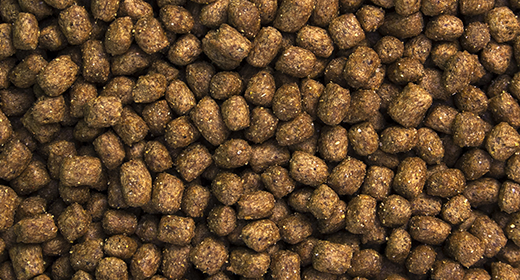
At IAMS, we offer dry cat food and kibbles that are made with premium-quality meat like chicken, tuna, and salmon. Along with being rich in protein, our range of cat food is also loaded with essential vitamins and minerals for cats.
If your cat accidently eats raw meat, take it to your vet as soon as possible. Cats exhibit the following symptoms every time they eat something their system doesn’t accept: